
Summary
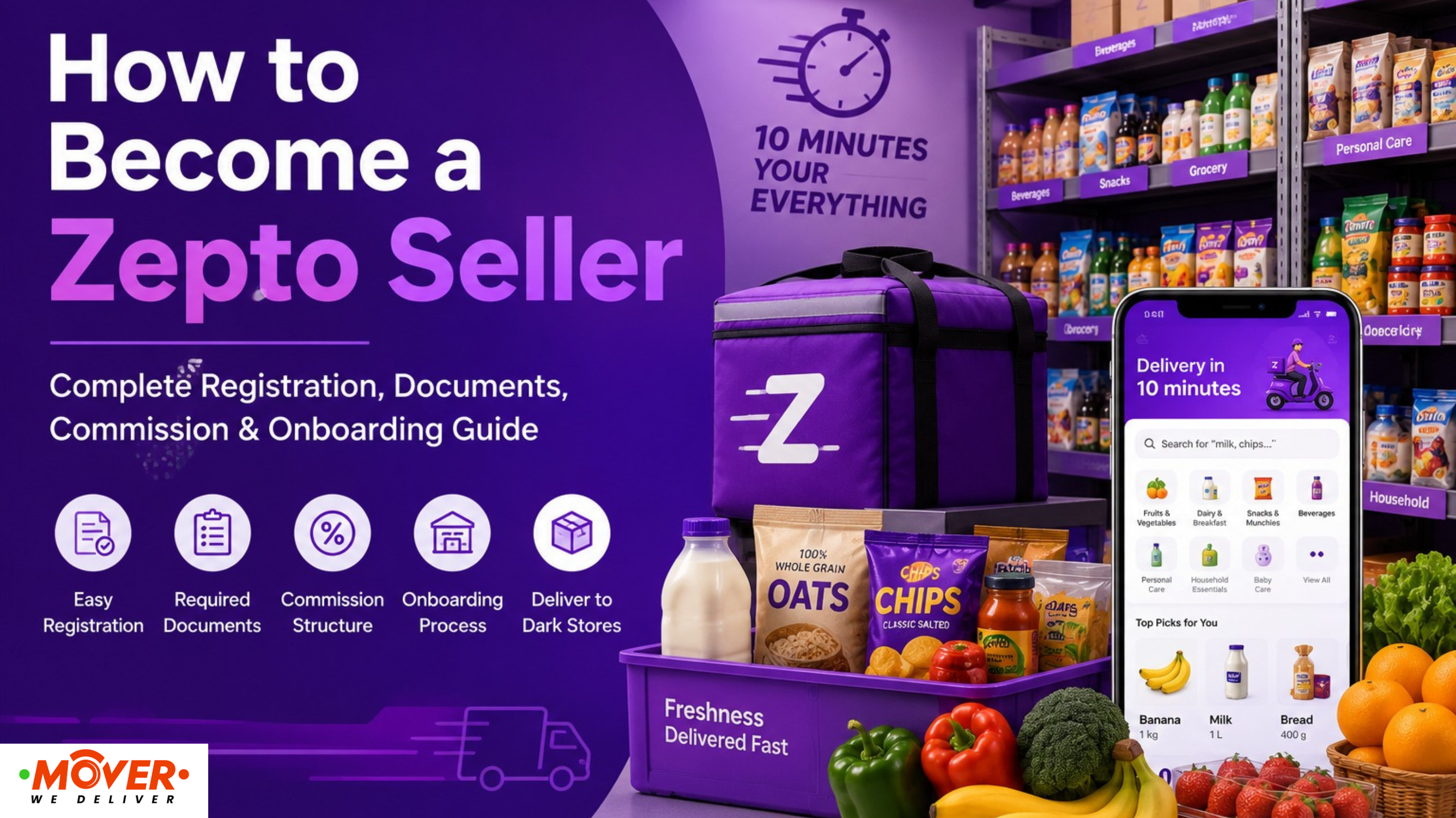
Registering as a Zepto seller involves submitting your business profile, GST details, product catalogue, and other mandatory documents through Zepto's supplier onboarding process. After document verification, Zepto evaluates your product category, pricing, inventory capacity, and compliance before approving your application. This guide explains the complete Zepto seller registration process, eligibility criteria, Zepto seller documents required, approval timeline, and how to start supplying inventory to Zepto's fulfilment centres once you're onboarded.
Zepto at a Glance
-
1,500+ PIN Codes Covered
-
1,100+ Stores Across India
-
135K+ Product Selection
-
3,800+ Partner Brands
-
47M+ Active Customers
Introduction
Selling on quick commerce like Zepto can help brands reach customers faster, increase product visibility, and generate more sales. However, becoming a Zepto seller isn't as simple as listing your products online. Businesses need to meet specific eligibility criteria, submit the right documents, complete Zepto's vendor onboarding process, and demonstrate their ability to maintain consistent inventory and fulfil orders efficiently. Missing documents, incomplete applications, or supply chain limitations can delay approval and postpone your go-to-market plans.
Understanding the Zepto seller registration process before applying can save time and help you prepare your business for a smoother onboarding experience. From GST registration and product catalogues to pricing, packaging, and compliance requirements, every step plays an important role in determining whether your application is approved. Businesses that prepare these essentials in advance are often better positioned to complete the onboarding process without unnecessary delays.
This guide explains how to register as a Zepto seller, including the eligibility criteria, Zepto seller documents required, the step-by-step registration process, common reasons applications are rejected, and practical tips to improve your chances of approval. It also covers an often-overlooked aspect of quick commerce: how to efficiently transport inventory to Zepto's fulfilment centres once your business is onboarded, helping you prepare for success beyond the registration process.
Why Sell on Zepto Quick Commerce?
Quick commerce has changed how consumers shop for everyday essentials. Instead of waiting one or two days for deliveries, customers now expect groceries, personal care products, beverages, household essentials, and other frequently purchased items to arrive within minutes. This shift in buying behaviour has created new opportunities for brands to reach customers faster and generate more frequent sales. For businesses planning to sell on Zepto quick commerce, the platform offers access to a rapidly growing customer base and a technology-driven fulfilment network that supports hyperlocal deliveries.
Selling on Zepto can offer several advantages for brands, including:
-
High-frequency repeat orders for products such as groceries, beverages, personal care items, baby products, and household essentials.
-
Faster customer acquisition driven by convenience, impulse purchases, and quick delivery expectations.
-
Access to hyperlocal demand insights, helping brands understand which products perform best across different locations.
-
A valuable sales channel for D2C brands, complementing existing marketplaces such as Amazon and Flipkart rather than replacing them.
-
Improved product visibility by placing inventory closer to customers through Zepto's network of fulfilment centres and dark stores.
As Zepto continues to expand its operations across major Indian cities and product categories, becoming an approved supplier can help businesses strengthen their omnichannel strategy while meeting the growing demand for quick commerce.
Who Can Register as a Zepto Seller?
Unlike traditional marketplaces where individual sellers list products directly for customers, Zepto follows a B2B2C (Business-to-Business-to-Consumer) supplier model. Businesses supply inventory to Zepto's fulfilment centres or dark stores, while Zepto manages inventory distribution, order processing, and last-mile delivery to customers. As a result, the company primarily partners with brands, manufacturers, distributors, and suppliers that can consistently maintain product quality and inventory availability.
Businesses that can become a Zepto supplier include:
-
FMCG brands and manufacturers offering packaged foods, beverages, personal care products, cleaning supplies, and household essentials.
-
D2C brands selling products in categories such as food, wellness, beauty, personal care, baby care, pet care, and home essentials.
-
Authorised distributors and wholesalers with valid brand authorisation and the ability to supply inventory consistently.
-
Dairy, bakery, frozen food, and fresh produce suppliers that meet Zepto's quality, food safety, and cold-chain requirements.
-
Health, nutrition, and daily-use consumer brands with products suitable for quick commerce and high-frequency purchases.
Before starting the Zepto seller registration process, businesses should also ensure they have an active GST registration, as it is a mandatory requirement for supplier onboarding. Depending on the product category, additional licences such as an FSSAI licence for food and beverage products may also be required during the verification process.
Eligibility Criteria for Zepto Seller Registration
Before starting the Zepto seller registration process, ensure your business meets Zepto's basic eligibility requirements. While the exact criteria may vary depending on your product category and commercial discussions, suppliers are generally expected to satisfy the following requirements.
|
Eligibility Criteria |
Why It Matters |
|
GST Registration |
A valid GST registration is mandatory for supplier onboarding and tax compliance. |
|
Registered Business Entity |
You should operate as a proprietorship, partnership, LLP, or private/public limited company with valid registration documents. |
|
Product Quality |
Products should meet Zepto's quality standards and align with customer expectations for quick commerce. |
|
Packaging Standards |
Products must be securely packaged, properly labelled, and suitable for storage and delivery through Zepto's fulfilment network. |
|
Barcode (EAN/UPC) |
Products should have valid barcodes for accurate inventory management and catalogue mapping. |
|
Reliable Supply Capability |
Suppliers should be able to maintain consistent inventory levels and replenish stock regularly to avoid stock-outs at fulfilment centres or dark stores. |
*Note: Meeting these eligibility criteria does not guarantee approval. Zepto also evaluates factors such as category demand, pricing competitiveness, operational readiness, and overall business fit during the vendor onboarding process.
Zepto Seller Documents Required
Preparing your documents before applying can significantly reduce delays during the Zepto seller registration process. Zepto verifies your business identity, tax registrations, banking information, and product details to ensure suppliers meet its onboarding standards. Keeping all documents accurate and up to date can help speed up verification and improve your chances of approval.
Mandatory Documents
The following documents are generally required for Zepto vendor onboarding:
|
Document |
Purpose |
|
GST Registration Certificate |
Confirms your business is registered for GST. |
|
PAN Card |
Verifies the business or authorised signatory. |
|
Business Registration Proof |
Proprietorship, Partnership, LLP, or Company Incorporation Certificate. |
|
Bank Account Details & Cancelled Cheque |
Used for seller payouts and must match the registered business name. |
|
Business Address Proof |
Confirms your registered business address. |
Category-Specific Documents
Depending on the products you plan to sell, Zepto may also request additional documents:
|
Document |
Applicable For |
|
FSSAI Licence |
Mandatory for food, beverages, grocery, dairy, and other consumable products. |
|
Trademark Certificate or Brand Authorisation Letter |
Required if you own the brand or are an authorised distributor or reseller. |
|
Product Catalogue |
Should include SKU details, EAN/barcodes, MRP, shelf life, dimensions, weight, and product images. |
|
Quality or Compliance Certifications |
Required for regulated product categories where applicable. |
Step-by-Step Zepto Seller Registration Process
Once you've gathered the required documents and confirmed your business meets Zepto's eligibility criteria, you can begin the Zepto seller registration process. While the exact onboarding journey may vary depending on your product category and business profile, the following steps outline how most suppliers become a Zepto supplier.
Step 1: Submit Your Seller Application
Start by registering your interest through Zepto's official Partner Portal or by contacting the relevant category buying team. During this stage, you'll provide basic business information, including your company name, product categories, contact details, and a brief overview of your brand.
Step 2: Share Your Product Catalogue
After the initial application, you'll be asked to submit your product catalogue. This typically includes SKU details, pricing, MRP, EAN/barcodes, product dimensions, shelf life (where applicable), and high-quality product images. A well-organised catalogue makes it easier for Zepto's team to evaluate your products.
Step 3: Upload the Required Documents
Next, submit all mandatory business documents for verification. These generally include your GST registration certificate, PAN card, bank account details, business registration documents, and category-specific licences such as FSSAI for food and beverage products. Incomplete or incorrect documentation can delay the onboarding process.
Step 4: Business & Category Verification
Zepto's category management team reviews your application to assess product quality, pricing, demand, packaging standards, and your ability to maintain consistent inventory. Depending on your category, the team may also request additional information or clarifications before moving your application forward.
Step 5: Commercial Discussion
If your application meets Zepto's requirements, the next stage involves discussing commercial terms. This may include pricing, supply expectations, payment cycles, service levels, and other partnership conditions that govern your relationship with the platform.
Step 6: Catalogue & SKU Setup
Once commercial terms are finalised, Zepto prepares your product listings for the platform. During this stage, approved SKUs are mapped, product information is verified, and catalogue details are configured to ensure customers can easily discover your products after launch.
Step 7: Sign the Supplier Agreement
Before your products can go live, you'll need to review and sign the supplier agreement. This formalises the partnership and outlines the responsibilities, policies, and operational terms for both parties.
Step 8: Supply Inventory to Zepto's Fulfilment Centres
After onboarding is complete, you'll begin supplying inventory to Zepto's designated fulfilment centres or dark stores. Maintaining adequate stock levels and replenishing inventory on time is essential to avoid stock-outs and ensure your products remain available for customers.
How Long Does Zepto Seller Approval Take?
The Zepto seller registration process typically takes 3 to 6 weeks (approximately 20–45 days) from application submission to going live on the platform. While initial document verification may be completed within a couple of weeks, the overall timeline also includes category evaluation, commercial negotiations, catalogue setup, and inventory onboarding before your products become available for customers.
A typical onboarding journey includes the following stages:
|
Onboarding Stage |
Estimated Timeline |
What's Involved |
|
Application & Category Review |
1–2 weeks |
Zepto evaluates your product category, brand fit, pricing, and supply capability. |
|
Document Verification |
5–10 business days |
Verification of GST, PAN, bank details, FSSAI licence (if applicable), and other business documents. |
|
Commercial Discussions & Catalogue Setup |
5–10 days |
Finalising commercial terms, approving product listings, SKU mapping, pricing, and catalogue information. |
|
Inventory Inwarding |
3–5 days |
Your initial inventory is received, verified, and stocked at Zepto's fulfilment centres or dark stores before launch. |
Several factors can influence the approval timeline, including the completeness of your documents, your product category, the number of SKUs submitted, and how quickly commercial terms are finalised. Businesses that submit accurate documentation and a well-prepared product catalogue often experience a smoother onboarding process.
*Tip: Don't wait until you're approved to plan your logistics. Once Zepto confirms your onboarding, you'll need to deliver inventory to its fulfilment centres quickly to avoid delaying your product launch. Having your inventory, packaging, and transportation ready in advance can help you go live faster.
Zepto Vendor Onboarding: Commission & Costs
Understanding Zepto's commercial model is just as important as completing the registration process. Unlike some online marketplaces that charge a fixed seller registration or listing fee, Zepto primarily works on a commercial margin model, where the final commercial terms are agreed upon during the onboarding process.
While the exact commission or margin depends on factors such as your product category, pricing strategy, order volumes, and commercial negotiations, businesses generally report margins ranging from 8% to 25%. The final percentage varies by category and is discussed during the vendor onboarding process.
Besides the commercial margin, suppliers should also account for other operational costs, including:
-
Product packaging and labelling
-
Control transportation expenses to maintain healthy margins and reduce logistics costs as your business grows.
-
Inventory replenishment and warehousing
-
Promotional or marketing participation (where applicable)
-
Product compliance and category-specific certifications
*Business Tip: Before finalising your pricing, calculate your product cost, logistics expenses, packaging, and Zepto's commercial margin together. Pricing your products without considering these costs can reduce profitability and make future commercial negotiations more challenging.
Common Reasons Zepto Seller Applications Get Rejected
Meeting the basic eligibility criteria doesn't automatically guarantee approval. During the Zepto vendor onboarding process, the company evaluates not only your documents but also your product quality, operational readiness, and overall business fit. Understanding the common reasons applications are delayed or rejected can help you prepare a stronger application from the start.
|
Reason |
Why It Can Lead to Rejection |
|
Missing or Invalid GST Registration |
Zepto requires suppliers to have valid business registrations. Missing, expired, or incorrect GST details can prevent the onboarding process from moving forward. |
|
Incomplete or Incorrect Documents |
Mismatched business names, incorrect bank details, expired licences, or missing category-specific documents often result in additional verification or application rejection. |
|
Poor Packaging Standards |
Products should be securely packaged, properly labelled, and suitable for storage and quick commerce fulfilment. Poor packaging can affect product quality and customer experience. |
|
Limited Product Demand |
Zepto may prioritise products that align with customer demand and category requirements. Products with low demand or limited market potential may not be onboarded immediately. |
|
Uncompetitive Pricing |
Products that are significantly more expensive than comparable brands may be less attractive from a commercial perspective during category evaluation. |
|
Inadequate Inventory Capacity |
Suppliers should be able to replenish inventory consistently. Businesses with limited production or supply capacity may find it difficult to meet Zepto's operational requirements. |
Tips to Increase Your Chances of Getting Approved
-
Prepare a complete product catalogue with accurate SKU details, pricing, barcodes, and high-quality product images.
-
Keep your pricing competitive by researching similar products already available in the market.
-
Maintain sufficient inventory to demonstrate that you can fulfil regular purchase orders without stock shortages.
-
Follow proper packaging standards to ensure your products are ready for storage and quick commerce deliveries.
-
Verify all business documents before submission and make sure details match across GST, PAN, and bank records.
-
Obtain all required licences such as FSSAI for food and beverage products before applying.
-
Respond promptly to any queries or requests for additional information during the verification process.
-
Plan your inventory replenishment strategy in advance so you can begin supplying products as soon as your application is approved.
Once You're Approved: Getting Your Inventory to Zepto's Fulfillment Centers
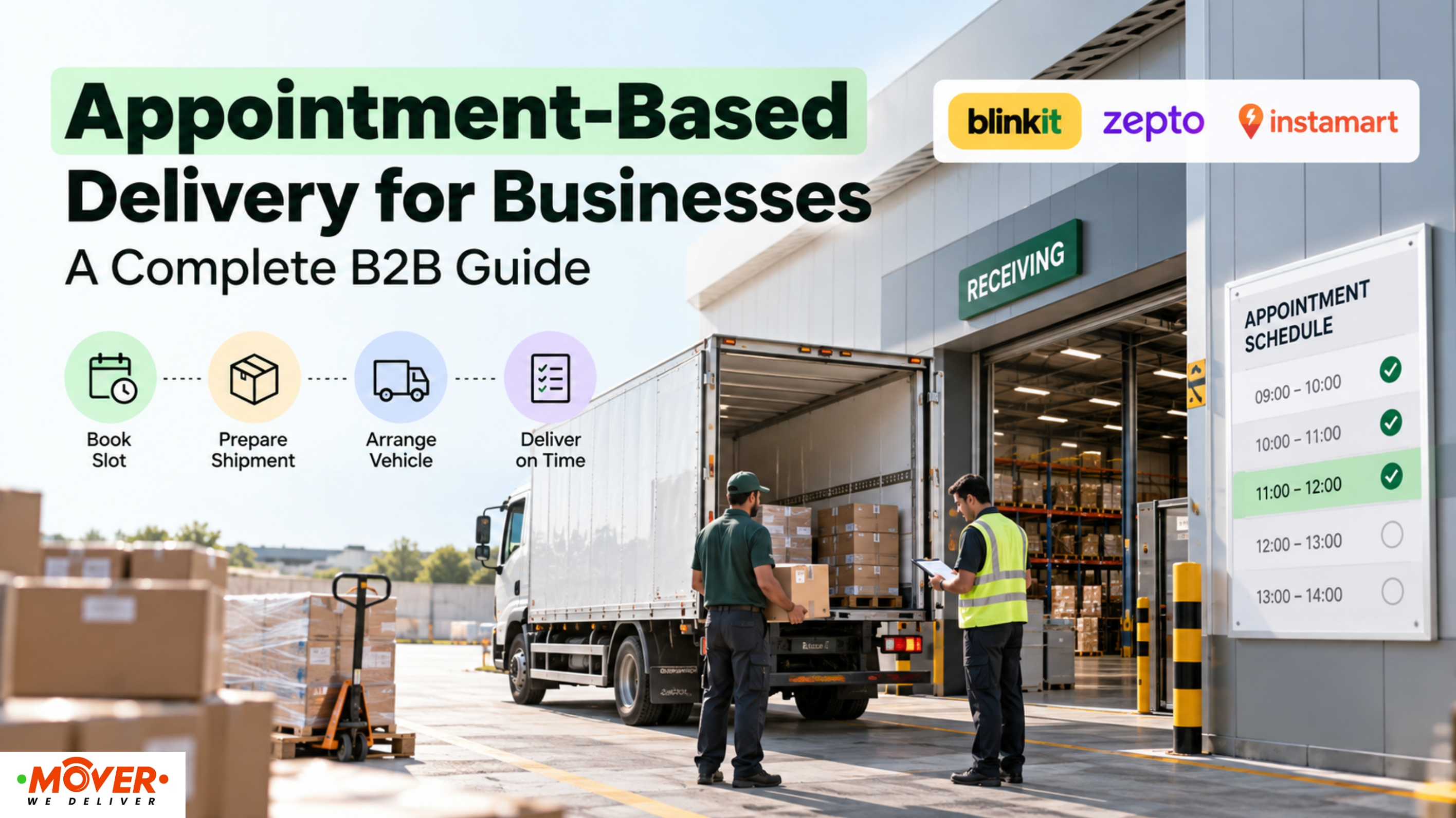
Getting approved as a Zepto seller is only the beginning. Once your products are listed, you'll need to ensure inventory reaches Zepto's fulfilment centres or dark stores on time. Delays in replenishment can lead to stock-outs, affecting product availability, sales, and customer satisfaction.
As your business grows, manually arranging transportation for every shipment can become inefficient. Choosing a reliable logistics partner helps ensure inventory reaches fulfilment centres on schedule, allowing you to maintain consistent stock levels and support faster order fulfilment.
For businesses supplying inventory within the same city, MOVER simplifies transportation with flexible commercial vehicle options ranging from Tata Ace and pickup trucks to larger trucks. Through online truck booking, businesses can quickly arrange vehicles based on shipment size while benefiting from transparent pricing, live tracking, and Proof of Delivery (POD). These features help streamline regular inventory replenishment and support smoother operations after your Zepto onboarding is complete.
FAQs
1. How do I register as a Zepto seller?
You apply through Zepto's official partner portal (brands.zepto.co.in) or through direct outreach to Zepto's category buying team, submit your business and product details, and go through document verification, catalogue approval, and commercial negotiation before going live.
2. What documents are required to become a Zepto supplier?
At minimum, you'll need a GST certificate, PAN card, proof of business registration, bank details, and address proof. Food and grocery sellers additionally need an FSSAI license, and distributors need a brand authorisation letter or NOC.
3. How long does Zepto vendor onboarding take?
Timelines vary, but most sellers report a range of 10–15 business days for straightforward categories, up to 3–6 weeks for a full launch involving commercial negotiation and dark store inwarding.
4. What commission does Zepto charge sellers?
Zepto typically charges a commission between 8% and 25%, depending on your product category and the commercial terms agreed with your category manager.
5. Can individual sellers register on Zepto, or only businesses?
Zepto onboards suppliers, not individual sellers. You need a legally registered business (proprietorship, LLP, or company) with valid GST registration to apply.
6. How do I get my inventory to Zepto's dark stores after approval?
Once approved, you'll need a replenishment plan that supports frequent, short-haul deliveries to multiple dark stores across your priority cities often requiring a reliable intracity logistics partner to manage daily or near-daily stock movement.