
Summary
Long delivery shifts put your helmet to the test, so choosing the right one matters. The best helmet for delivery boy work should offer reliable protection, a secure fit, and comfort throughout the day. Whether you prefer a full-face, open-face, or flip-up design, check for genuine ISI certification and a properly fastened chin strap. Features such as good ventilation, clear visor visibility, and washable padding can make daily rides more comfortable. Compare different models, try your helmet before buying, and replace it after a significant impact. A well-fitted, well-maintained helmet helps you make road safety a priority on every delivery.
Introduction
What should you look for in a helmet when one delivery shift means hours in traffic, dozens of stops, and barely a break? For delivery partners, choosing the right helmet is about more than comfort or price. It is about protecting yourself every time you head out to pick up an order or complete a delivery.
The Ministry of Road Transport and Highways recorded 54,568 deaths among people not wearing helmets in India in 2023, including riders and pillion passengers. This highlights why wearing a suitable helmet matters, especially for delivery riders who spend long hours on busy roads.
The best helmet for delivery boy work should offer reliable protection, a secure fit, clear visibility, and enough ventilation for daily use. A lightweight design may feel more comfortable, but weight alone does not determine safety. Genuine ISI certification, a properly fastened chin strap, and the right fit are equally important.
In this guide, we'll compare helmet options, explore different helmet types, and explain what to consider before buying one for daily delivery work.
Best Helmets for Delivery Riders in India
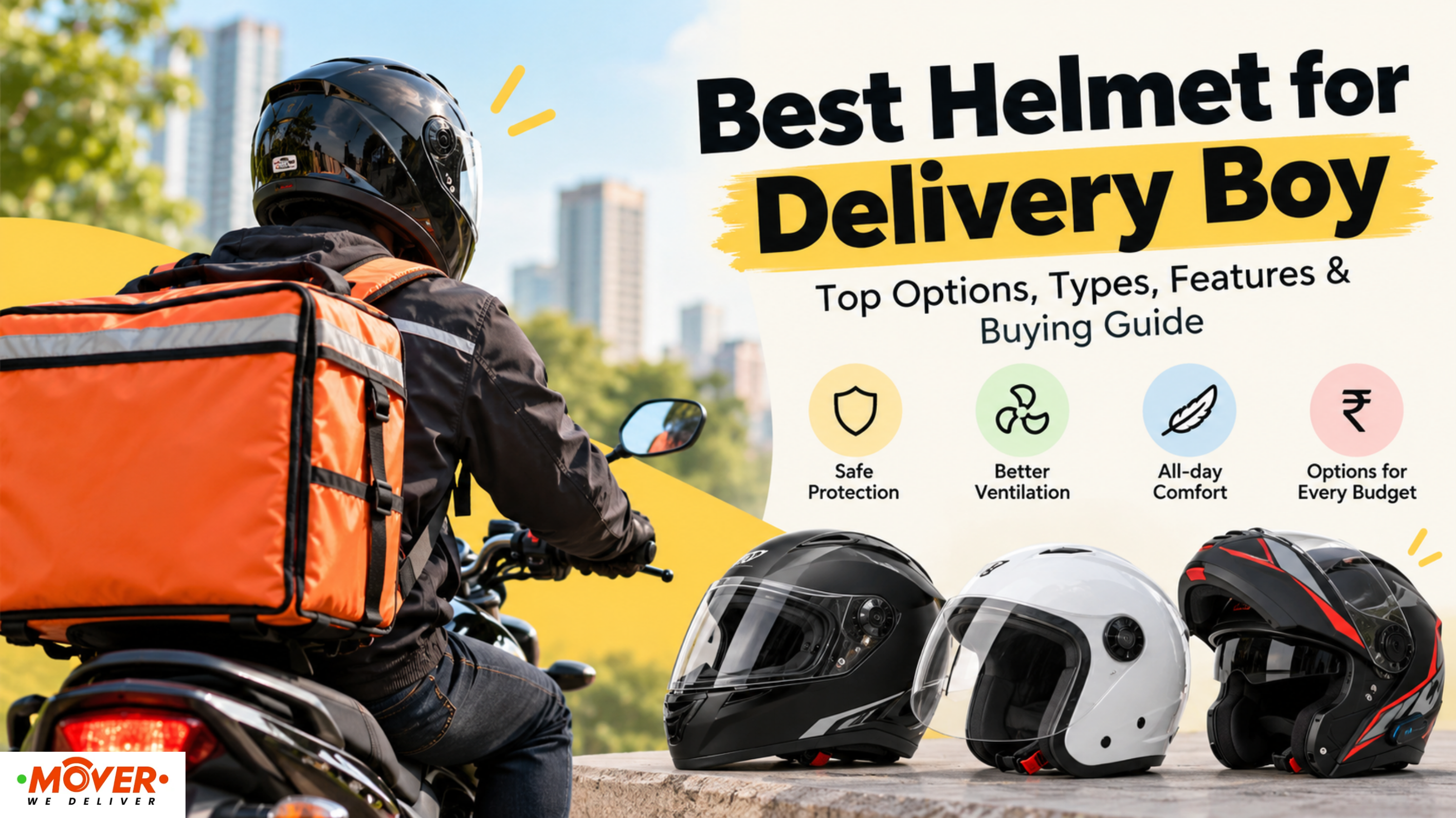
Picking up the best helmet becomes easier when you know what you need. If you prefer more facial coverage, a full-face helmet is worth considering. An open-face helmet offers a more open design, while a flip-up helmet has a movable chin section.
Here are 11 models to compare across different budgets and riding preferences.
|
Type of Helmet |
Helmet |
Approx. current price |
Features to consider |
|
Full-Face Helmets |
Studds Thunder D4 Decor |
₹2,400-₹2,500 |
Ventilation system, replaceable hypoallergenic liner, quick-release visor, and chin strap. |
|
Steelbird SBA-1 R2K |
₹2,050-₹2,200 |
Breathable padding, air ducts, neck protector, and quick-release visor. |
|
|
Steelbird SBH-17 Terminator |
Check current listing |
Multi-pore ventilation, washable lining, neck protector, and Bluetooth kit option. |
|
|
Steelbird Air Beast |
Check current listing |
Multiple vents and removable, washable pads. |
|
|
Steelbird Cyborg Double Visor |
Check current listing |
Clear and smoke visor options for different lighting conditions. Use a clear visor at night. |
|
|
Vega Cliff |
Around ₹1,100 |
ISI certification listed by Vega, washable lining, quick-release buckle, and ventilation points. |
|
|
Vega Bolt Bunny Black Neon |
Around ₹2,400 |
Full-face design with graphic options. Check the exact variant's fit, liner, and ventilation details. |
|
|
Vega Ryker D/V |
Around ₹1,800 |
Dual visor system, washable lining, quick-release buckle, removable nose guard, and multiple vents. |
|
|
Flip-Up Helmet |
Studds Ninja Elite |
₹1,795 MRP |
High-impact outer shell, hypoallergenic liner, and quick-release chin strap. |
|
Vega Crux Flip-Up |
Around ₹1,650 |
Single-lever chin guard designed to resist accidental opening, washable lining, and scratch- and UV-resistant visor. |
|
|
Steelbird SBA-7 7Wings |
₹1,500-₹1,700 |
Flip-up chin bar, inner smoke sun shield, and removable, scratch-resistant visor. |
|
|
Open-Face Helmets |
Vega Crux Open Face |
Around ₹1,100 |
Washable lining, quick-release buckle, and ventilation. Check the exact variant because Vega's product specifications also mention a movable chin guard. |
|
Studds Marshall |
₹1,600-₹1,700 |
Replaceable liner, hypoallergenic padding, regulated-density EPS, and quick-release chin strap. |
|
|
Studds Ray |
₹1,100-₹1,200 |
Top air vents, hypoallergenic liner, and quick-release chin strap. |
|
|
Vega Atom |
Around ₹1,100 |
Washable lining, quick-release silent buckle, and scratch- and UV-resistant visor. |
|
|
Studds Urban |
Around ₹1,400-₹1,500 |
Ventilation system, hypoallergenic liner, and quick-release chin strap. |
Full-Face vs Open-Face vs Flip-Up: Which Helmet Suits Delivery Work?
Not sure which helmet type is right for you? Your choice depends on how long you ride, the roads you travel, and how much facial coverage you prefer. Each design has its own benefits, so it helps to understand the differences before buying.
|
Helmet type |
Main benefit |
What to consider |
Best suited for |
|
Full-face |
Covers the head, face, and chin |
Can feel warmer during long rides, especially in hot weather |
Riders who want greater facial coverage during daily commutes and delivery shifts |
|
Open-face |
Offers a more open feel and airflow |
Leaves more of your face exposed |
Riders who prefer an open design for short city trips |
|
Flip-up |
Has a movable chin section for added convenience when stopped |
Check the locking mechanism and follow the manufacturer's riding instructions |
Riders who want the convenience of a movable chin guard |
Which Helmet Should You Choose?
If you spend most of your shift riding through heavy traffic, a full-face helmet is worth considering because it covers more of your face and chin. Look for good ventilation to stay comfortable on longer rides.
An open-face helmet may feel less restrictive, especially when you're riding short distances in warm weather. However, it offers less facial coverage, so consider this trade-off before making your choice.
A flip-up helmet gives you another option. You can raise the chin section when you stop to speak to a customer or security staff. Before buying one, check that the mechanism locks securely and follow the manufacturer's instructions about riding with the chin section raised or lowered.
Whatever design you choose, make sure it fits correctly, has genuine safety certification, and stays securely fastened while you ride.
How to Choose a Helmet for Delivery Riders?
Finding the right helmet for delivery riders gets easy once they understand how to choose it. If you spend hours on the road, you need a helmet that fits you properly, keeps you comfortable during long shifts, and offers reliable protection. Here's what you should check before you buy.
1. Check for Genuine ISI Certification
Safety should be your first priority. Look for a genuine ISI mark and check that the helmet meets the applicable Indian safety standard. Don't rely only on a seller's description or a low price. Buy from a trusted seller and check the markings on the helmet before paying.
2. Choose the Right Fit
A helmet should fit snugly without causing pain or pressure points. It shouldn't move around easily when you turn your head, and it shouldn't feel so tight that wearing it becomes uncomfortable.
Try different sizes before buying. Remember that the same size may fit differently across brands.
3. Look for Good Ventilation
Indian summers can make long delivery shifts uncomfortable. Air vents help with airflow and can make a helmet feel less stuffy. If you ride for hours in busy city traffic, check the ventilation system before choosing a model.
4. Check the Weight and Balance
A helmet that feels balanced on your head may be more comfortable during long shifts. Don't choose one based on weight alone, though. A lighter helmet is not automatically safer. Prioritise proper fit, genuine certification, and overall comfort.
5. Check the Visor and Visibility
You need a clear view of traffic, road signs, and other vehicles while riding. Look for a visor that gives you a clear, undistorted view and is easy to operate. If the helmet has a tinted inner visor, make sure you can use a clear visor when riding at night.
6. Look for Washable Padding
Sweat, dust, and daily use can make the inside of your helmet dirty. Removable, washable padding makes regular cleaning easier. Check whether the lining can be removed and reinstalled properly.
7. Set a Practical Budget
You don't need to buy the most expensive helmet to make a sensible choice. Compare the features, fit, certification, and comfort of models within your budget. Your delivery partner earnings may vary, so it makes sense to compare prices carefully. However, don't compromise on genuine safety certification or a secure fit just to save money.
What Makes a Helmet Safe for Delivery Partners?
The safest helmet for delivery riders isn't necessarily the most expensive one. You need a helmet that meets safety standards, fits you properly, and stays secure while you ride.
Here are three things you should never overlook:
-
Genuine ISI certification: Check for the ISI mark and buy from a trusted seller. Don't rely only on product descriptions or discounts.
-
Secure fit and chin strap: Your helmet shouldn't wobble or come off easily. Fasten the chin strap every time you ride.
-
Good condition: Avoid damaged or second-hand helmets with an unknown history. Replace your helmet after a significant impact, even if you can't see any cracks.
You should also keep your riding documents in order, including the applicable driving licence and insurance for your vehicle and work. Check the requirements that apply to your situation before relying on a particular licence category.
Remember, your helmet is everyday safety gear. Choose it carefully and wear it correctly on every delivery.
How to Check If Your Helmet Fits Properly
Before you buy, try these simple checks:
-
Your helmet should sit level on your head and feel snug all around, without painful pressure points.
-
Move your head from side to side and up and down. The helmet shouldn't slide around or feel loose.
-
They should feel snug against your cheeks without pinching or causing discomfort.
-
Make sure it holds the helmet securely beneath your chin.
-
Keep it on for 10-15 minutes. If you notice pressure on your forehead or temples, try a different size or model.
-
Don't choose a helmet based on its size label alone. The fit can vary between brands, so try different models before deciding.
Also, keep your riding documents in order, including your applicable driving licence and vehicle insurance. A well-fitting helmet is an essential part of staying protected throughout your delivery shift.
How to Keep Your Helmet Comfortable During Long Delivery Shifts?
Wearing a helmet for hours can get uncomfortable, especially when you're riding in hot weather. If you use your helmet every day, a little care can help you keep it clean, fresh, and comfortable throughout your shift.
-
Clean the padding regularly: Remove and wash the inner lining if the manufacturer allows it. Let it dry completely before wearing it again.
-
Keep the vents clear: Dust can block airflow, so clean the vents as recommended by the manufacturer.
-
Keep your visor clean: Use a soft cloth and a suitable cleaner to remove dust and smudges. A clear visor helps you see the road properly.
-
Check the strap and buckle: Make sure they work properly before heading out for deliveries.
-
Choose the right fit: If your helmet feels too tight, try another size or model instead of wearing it loosely.
-
Let your helmet air-dry: After a sweaty shift, leave it in a well-ventilated area to dry naturally.
-
Avoid harsh cleaning products: Strong chemicals can damage the helmet's shell, visor, or inner padding. Follow the manufacturer's cleaning instructions.
-
Store it properly: Keep your helmet in a clean, dry place away from direct sunlight and excessive heat.
-
Avoid dropping your helmet: Repeated drops can damage internal components, even if you don't see cracks on the outside.
-
Inspect it regularly: Check the shell, lining, visor, and chin strap for signs of wear or damage.
-
Replace damaged parts correctly: Use compatible replacement parts recommended by the manufacturer instead of making DIY repairs.
-
Replace it after a significant impact: Follow the manufacturer's guidance on replacement after a crash or impact, even if the damage isn't visible.
Conclusion: Join MOVER as a Driver Partner
Do you enjoy riding and want to explore delivery opportunities? Becoming a delivery partner can be an option if you're looking for work that involves travelling around your city and completing deliveries.
Before you get started, make sure you have a suitable vehicle, a properly fitted helmet, and the documents required for your work. It's also worth checking the applicable driving licence requirements and understanding bike insurance for delivery partners before you begin.
If you're ready to explore delivery work, visit MOVER's Driver Partners page to learn more about joining the platform.
FAQs
1. What is the best helmet for delivery boys who ride all day?
The best helmet for delivery boys is one that fits securely, offers reliable protection, and feels comfortable during long shifts. Look for genuine ISI certification, good ventilation, a secure chin strap, and washable padding.
2. Is an open-face helmet suitable for food delivery boys?
An open-face helmet offers a more open feel, which some riders prefer for city rides. However, it leaves more of your face exposed than a full-face helmet. If you spend long hours in traffic, consider the extra facial coverage a full-face design provides.
3. Does a lighter helmet mean better protection?
No. A lighter helmet is not automatically safer. You should check its certification, fit, chin strap, and overall condition instead of choosing based on weight alone.
4. How can you check whether a helmet is ISI-certified?
Look for a genuine ISI mark on the helmet and buy from a trusted seller. Check the certification details and applicable Indian safety standard rather than relying only on the product description.
5. When should a delivery rider replace a helmet?
Replace your helmet after a significant impact, even if you cannot see any damage. You should also inspect it regularly for cracks, worn padding, or damaged straps and follow the manufacturer's replacement guidance.
6. Can you use a flip-up helmet for daily delivery work?
Yes, a flip-up helmet can be a practical option for daily delivery work. Check that its chin guard locks securely, and keep it closed and secured while riding unless the manufacturer specifically approves another configuration.
7. What features should you look for in a helmet for delivery partners?
Look for genuine ISI certification, a secure fit, a strong chin strap, good ventilation, and a clear visor. Washable padding can also help you keep your helmet clean during daily delivery shifts.
8. Is a dual-visor helmet useful for delivery riders?
A dual-visor helmet usually has an additional inner sun visor. It can be useful in bright daylight, but you should use a clear visor when riding at night to maintain visibility.
9. How often should you clean your delivery rider helmet?
Clean your helmet regularly, especially if you wear it for several hours every day. Follow the manufacturer's instructions for washing the lining, cleaning the visor, and caring for the outer shell.
10. Can you use a helmet with a scratched visor?
A badly scratched visor can affect your visibility, particularly at night or in bright sunlight. Replace it with a compatible visor if scratches obstruct your view or the manufacturer recommends replacement.
11. What should you check before starting a delivery shift?
Check that your helmet fits properly, the chin strap fastens securely, the visor gives you a clear view, and the shell has no visible damage. These quick checks can help you spot problems before heading out for deliveries.