

Insurance is one of the most overlooked requirements in delivery and logistics operations, yet it is one of the most critical. Whether you are riding a delivery bike for food orders or operating a goods vehicle for commercial transport with MOVER, the right insurance determines whether you stay protected or face financial loss during accidents, theft, or legal disputes.
In 2026, the enforcement of commercial vehicle insurance in India became stricter. Traffic authorities, insurance companies, and delivery platforms now cross-check vehicle registration type, licence category, and insurance usage more closely than before. Many delivery riders and small fleet owners still use private insurance policies for commercial work, which often leads to rejected claims, fines, or vehicle downtime.
For delivery bikes and goods vehicles, insurance is not just a legal formality. It directly impacts rider safety, claim approvals, and business continuity. A single rejected claim can wipe out weeks of earnings or halt operations entirely.
This guide explains the insurance requirements for delivery bikes and goods vehicles, the types of insurance needed, and common mistakes to avoid, so delivery riders and logistics operators can stay compliant and protected in 2026.
Why Insurance Is Mandatory for Delivery Vehicles in India?
Under the Motor Vehicles Act, every vehicle operating on Indian roads must carry at least third-party insurance. This rule applies to all vehicles, including delivery bikes, mini trucks, and goods carriers used for commercial purposes.
Delivery work is classified as commercial usage, which involves higher road exposure, longer operating hours, and increased accident risk. Because of this, insurance companies treat delivery vehicles differently from privately used vehicles. Using the wrong insurance category can invalidate coverage completely.
For delivery riders and goods vehicle owners, insurance protects against:
-
Third-party injury or property damage claims
-
Legal liabilities after accidents
-
Financial losses caused by vehicle damage or theft
In 2026, insurance checks are frequently linked with vehicle registration data and licence classification, especially for vehicles registered under commercial vehicle registration rules. This means having valid insurance that clearly mentions commercial or delivery usage is essential to avoid penalties and claim rejection.
Delivery Bike Insurance Requirements in India
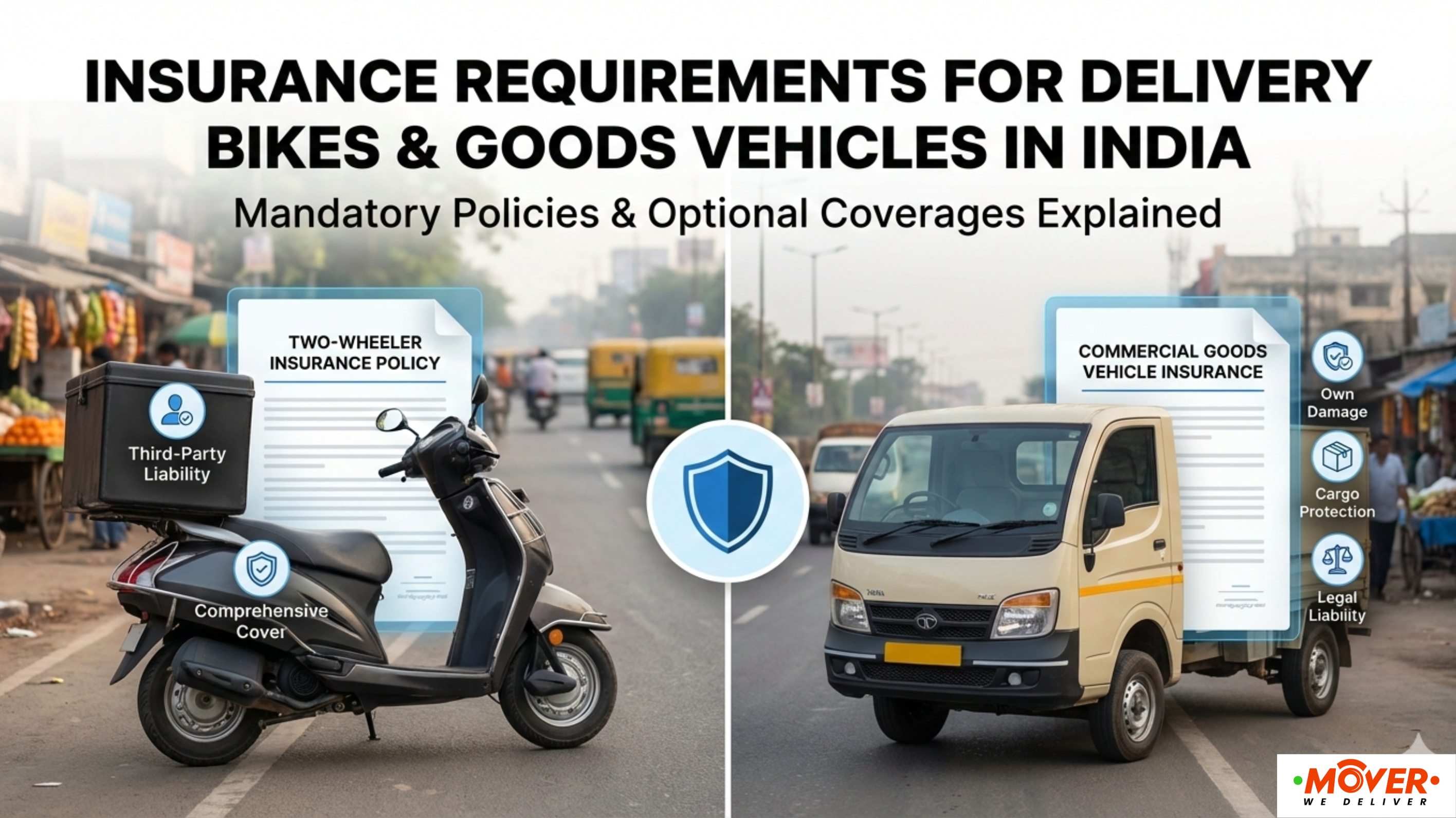
Delivery bikes used for food delivery, courier services, or e-commerce shipments must have commercial two-wheeler insurance. A standard private bike insurance policy does not cover delivery-related activities, even if the rider owns the vehicle.
Delivery bike insurance must include:
-
Mandatory third-party liability cover
-
Commercial usage declaration
-
Personal accident cover for the rider
Using private insurance for delivery work is one of the most common mistakes riders make. In case of an accident during a delivery, insurers can deny claims if the policy does not match the vehicle’s commercial use.
In 2026, most organised delivery networks verify insurance details during onboarding or claim processing, similar to checks done during delivery rider onboarding and licence verification. Riders without valid delivery bike insurance may face claim rejection, penalties, or deactivation from delivery work. Having the correct insurance ensures riders stay protected while earning on the road.
Goods Vehicle Insurance Requirements in India
Goods vehicles such as mini trucks, pickup vans, and light commercial vehicles used for deliveries must carry commercial goods vehicle insurance. This applies whether the vehicle is used for local deliveries, intercity movement, or last-mile logistics.
As per Indian law, at least third-party insurance is mandatory for all goods vehicles. However, third-party cover only protects against damage or injury caused to others. It does not cover damage to the vehicle itself, theft, or losses during delivery operations.
For logistics businesses already dealing with issues like documentation checks and route delays, using incorrect or insufficient insurance adds another layer of risk. This is why goods vehicles that are commercially registered must also carry insurance that clearly mentions goods-carrying and commercial use.
In 2026, insurance verification is commonly linked with RC details, permit status, and fitness certificates, making compliance essential for uninterrupted operations.
Types of Insurance for Delivery Bikes & Goods Vehicles
The table below explains the different insurance types required or recommended for delivery bikes and goods vehicles used in commercial and logistics operations.
|
Insurance Type |
Who It’s For |
What It Covers |
Mandatory |
|
Third-Party Insurance |
All delivery bikes & goods vehicles |
Injury, death, or property damage caused to third parties |
Yes |
|
Commercial Vehicle Package Policy |
Delivery bikes, vans, mini trucks, goods carriers |
Third-party liability + damage to own vehicle due to accidents, theft, fire, or natural disasters |
Recommended |
|
Goods-in-Transit Cover |
Goods vehicles used for deliveries |
Loss, theft, or damage to goods being transported during delivery |
Optional |
|
Personal Accident Cover |
Delivery rider/driver |
Death or permanent disability of the rider or driver |
Yes |
Third-Party vs Comprehensive Insurance - What Should You Choose?
Third-party insurance for delivery vehicles is the legal minimum, but it is risky for daily delivery work. It only covers injury, death, or property damage caused to others and does not protect your own bike or goods vehicle.
For delivery riders and logistics operators, accidents, slips, theft, or vehicle damage are common risks. Without comprehensive cover, repair costs come directly out of pocket, leading to income loss and downtime.
This is why commercial vehicle insurance in India is recommended in a comprehensive form for delivery use. It covers third-party liability along with self-damage, theft, fire, and accident-related losses—making it far safer for riders who operate every day.
Insurance Requirements for Delivery Riders (Bikes & Scooters)
Delivery riders are personally responsible for having the correct insurance policy, even when working through a platform. Aggregators or logistics networks do not cover individual vehicle damage or rider claims unless the policy is compliant.
Using private insurance for delivery work is one of the most common reasons for claim rejection. If an accident happens during a delivery, insurers check vehicle usage before approving claims.
This is why organised delivery networks, including MOVER, require riders to maintain valid commercial insurance. Proper coverage ensures riders stay active, protected, and financially secure during daily delivery operations.
Documents Required to Buy Commercial Vehicle Insurance
To purchase or renew commercial vehicle insurance, insurers usually ask for:
-
Vehicle Registration Certificate (RC) showing commercial registration
-
Valid driving licence (commercial category for delivery use)
-
Previous insurance policy document (for renewals)
-
Owner ID proof (Aadhaar, PAN, or Voter ID)
These documents are closely verified, especially for delivery bikes and goods vehicles used in logistics operations.
Common Insurance Mistakes Delivery Partners Make
-
Using private bike insurance for delivery work, which becomes invalid the moment the vehicle is used for commercial purposes.
-
Not declaring commercial usage to the insurer while purchasing or renewing the policy, leading to claim rejection during accidents.
-
Assuming delivery platforms provide insurance, without verifying individual vehicle coverage responsibilities.
-
Skipping personal accident cover, which is mandatory and crucial for financial protection in case of injury or death.
-
Letting the insurance policy lapse due to missed renewal dates, making the vehicle illegal to operate.
-
Choosing only third-party insurance to save costs, without understanding the high risk of self-damage expenses.
-
Not updating insurance details after vehicle conversion from private to commercial registration.
-
Ignoring add-ons like engine protection or roadside assistance, which are useful for daily delivery operations.
Insurance Impact on Claims, Accidents & Business Continuity
-
Incorrect insurance type often results in claim rejection, even if the accident itself is genuine. Delivery vehicles without valid insurance may face legal penalties, challans, or vehicle seizure during checks.
-
Claim delays or rejections cause vehicle downtime, directly impacting daily earnings for delivery partners.
-
Accidents without comprehensive cover force riders or fleet owners to pay repair costs out of pocket.
-
Insurance issues can lead to temporary deactivation from delivery platforms until compliance is restored.
-
Poor insurance planning increases operational disruptions, affecting order fulfilment and customer trust.
-
Repeated insurance-related failures can escalate logistics costs, especially during returns or replacement deliveries, where reverse logistics already adds extra handling and cost.
-
Valid insurance ensures smoother recovery after accidents and protects long-term business continuity in delivery operations.
Final Verdict
Insurance for delivery bikes and goods vehicles is not just paperwork, it is financial protection. The right policy safeguards riders and operators from claim rejection, legal penalties, and income loss after accidents. For delivery professionals, correct insurance ensures safety on the road and continuity of daily operations.
This becomes even more important when businesses rely on online truck booking and organised transport networks, where compliance gaps can cause delays, cancellations, or loss of earning opportunities.
Delivery operators working with structured ecosystems like MOVER benefit when vehicles are insured correctly, as it reduces downtime, avoids disputes, and keeps logistics running smoothly. Whether managing a single delivery bike or a fleet of goods vehicles, choosing the right insurance is a business necessity, not an optional expense.
FAQs: Insurance for Delivery Bikes & Goods Vehicles
1. Is insurance mandatory for delivery bikes in India?
Yes. At least third-party insurance is mandatory. For delivery use, commercial insurance is strongly recommended to avoid claim rejection and financial loss.
2. What type of insurance is required for delivery riders?
Delivery riders should have commercial two-wheeler insurance, preferably comprehensive, along with mandatory personal accident cover.
3. Is third-party insurance enough for delivery vehicles?
Legally yes, but practically no. Third-party insurance does not cover vehicle damage, theft, or delivery-related risks.
4. Can private bike insurance be used for deliveries?
No. Private insurance does not cover commercial usage and can result in rejected claims during accidents.
5. What insurance is required for goods vehicles?
Goods vehicles need commercial vehicle insurance, with third-party cover mandatory and comprehensive cover recommended.
6. Does delivery insurance cover goods in transit?
Only if a goods-in-transit add-on is included. Standard policies may not automatically cover cargo loss or damage.
7. Is personal accident cover compulsory for delivery riders?
Yes. Personal accident cover is mandatory for owners and drivers under Indian motor insurance rules.