
Returns are not just “the opposite of delivery.”
They are usually a quiet profit leak that keeps growing until it becomes obvious, because at first it looks manageable. A few returns here, a few exchanges there, a few refunds that feel like the cost of doing business. But once volumes increase, you start noticing patterns. Returned items arrive damaged even when the customer claims they packed them properly. Refunds get delayed because inspection takes time. Resellable stock gets stuck in limbo. Your team starts treating returns like a messy backlog, and customers start treating your brand like a risk.
This is exactly where reverse logistics becomes the difference between a brand that scales smoothly and a brand that scales with stress.
So this guide is written for operators, founders, and growth teams who want a clear answer to two things. Why returns cost more than deliveries, and what you can do to reduce return damage in a way that is practical, measurable, and implementable without turning your business into a warehouse company.
What Reverse Logistics Really Means
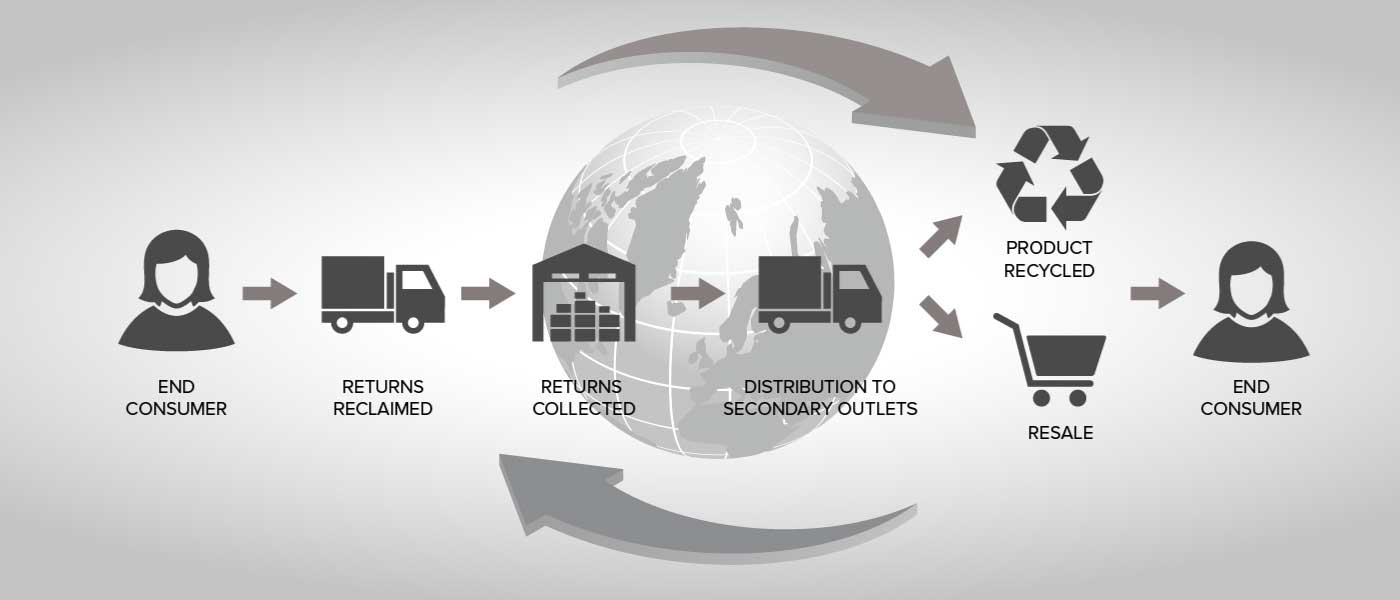
Reverse logistics is everything that happens when a product moves back from the customer to your system.
It includes returns, but it also includes exchanges, warranty pickups, repairs, refurbishing, recycling, disposal, and the decision-making in between that determines whether an item becomes sellable again or becomes a loss. That decision-making is the expensive part, because a returned item is not “inventory” the moment it comes back. It’s a question mark that needs time, handling, and judgment.
Reverse Logistics vs Forward Logistics
Forward logistics is designed to be predictable. You ship a product that is new, uniform in condition, and packed under your control. The job is simple. Deliver it fast and intact.
Reverse logistics is the opposite, because you are receiving items in different conditions, packed by customers with varying discipline, returned for different reasons, sometimes incomplete, sometimes used, and sometimes not even the same product. So reverse logistics is not just movement. It is movement plus uncertainty.
Reverse Logistics vs Returns Management
Returns management is the customer-facing flow. Return request, approval, pickup scheduling, and refund or exchange.
Reverse logistics is what happens after the item starts travelling back. Receiving, checking in, inspection, grading, and deciding what to do next. That back-end work is where time and money get consumed, and it is also where most return damage gets amplified if the system is weak.
Why Returns Cost More Than Deliveries
If you want a clean mental model, think of delivery as a straight line and returns as a maze.
A delivery has fewer touchpoints, fewer decisions, and a predictable path. A return has more touchpoints, more handling, and multiple possible end routes.
Here are the main reasons returns cost more, explained in a real operational way.
1) Returns have more touchpoints, and touchpoints create cost
A delivery typically moves through pick, pack, dispatch, and delivery.
A return usually moves through return initiation, pickup attempt, pickup, consolidation, check in, inspection, grading, decision on resale or refurbish, repackaging, restocking, and then refund completion. Even when each step looks small, the combined handling adds cost, and every additional handoff increases the chance of damage.
2) Returns are unpredictable, and unpredictability kills efficiency
Forward logistics is built for scale because it’s repeatable. Reverse logistics is messy because the reason for return changes, the condition changes, and the urgency changes. That means more exceptions, more manual work, and more time spent resolving edge cases.
The moment an item becomes an exception, it becomes expensive, because exceptions cannot be processed at the speed of normal flow.
3) Returns create a "limbo inventory" problem
A product out for delivery has a clear status. A returned product often doesn’t.
Until it’s checked in, inspected, and graded, it cannot be resold confidently. So it sits. It occupies space. It occupies attention. And if the category is seasonal or fast-moving, delayed return processing converts "recoverable inventory" into "dead inventory."
This is one of the biggest hidden return costs, because it doesn’t show up as a line item immediately. It shows up as lost recovery value over time.
4) Packaging control disappears, and damage risk rises immediately
When you ship forward, your packaging is standardized. When a customer returns, packaging quality becomes a gamble. Some customers reuse the original box properly. Others pack casually, and then the return arrives with corner crush, breakage, leakage, or scratches that were not present earlier.
So a return can get damaged even before it reaches your pickup partner, simply because the packaging was not designed to survive reverse handling.
5) Reverse logistics includes decisions, not just transport
A delivery is "deliver and done."
A return is "receive, inspect, decide, route."
Inspection needs trained eyes, and the routing needs rules, otherwise your team becomes inconsistent. Inconsistency is expensive because it creates disputes, slows refunds, and reduces recovery.
The Return Cost Stack
This table is the simplest way to see why returns become heavier than deliveries, and it also shows exactly where damage is created so you can reduce it.
If you fix just the bold truth here, which is packaging discipline plus fast check in plus consistent inspection grading, return damage drops dramatically.
Where Return Damage Actually Happens
Most brands think return damage happens "in transit."
In reality, it happens in predictable zones.
It starts with customer packing. Then it increases during pickup handling, especially when returns are collected alongside other goods without separation. Then it spikes during consolidation and check in when categories get mixed. And finally, it quietly becomes permanent during inspection when teams handle items without a consistent grading process.
So reducing return damage is less about one magic step and more about building a chain where each link is disciplined.
The Reverse Logistics System That Reduces Cost and Damage
A strong reverse logistics process is basically two things. Fewer unnecessary returns entering the system, and faster routing once items come back.
Step 1: Gatekeeper returns before you accept them
Gatekeeping is not about rejecting customers. It’s about preventing bad returns from entering your reverse flow when they should have been resolved differently.
Some cases need troubleshooting, replacement parts, video support, or an exchange without taking the original item back. Some cases are clear policy mismatches. Some cases show repeat abuse signals.
You don’t need fancy tools for this. You need rules, and you need a simple return initiation flow that collects the right proof for the categories where abuse or damage is common.
Step 2: Make return initiation capture the right details
Most brands only collect “reason for return.” That is not enough.
You want the return initiation step to capture what helps you route correctly, like whether the item is unopened, whether the original packaging exists, whether parts are missing, and whether the issue is cosmetic or functional. This is how you prevent receiving “surprises” later, and it also reduces disputes because expectations are set earlier.
Step 3: Control pickup like an appointment, not like a random attempt
Failed pickups are a silent cost multiplier. They waste time, burn capacity, and make customers irritated.
So treat pickups like scheduled windows, confirm availability before arrival, and give a simple instruction that the item must be sealed and ready. If your reverse pickups happen through a partner network, choose one that supports scheduled slots and basic proof trail, because it keeps both your operations and your customer experience stable. Many brands use partners like MOVER for reverse pickups and exchanges because it reduces the chaos of unplanned collections, especially when volume starts rising.
Step 4: Standardize how customers pack returns
Customers won’t follow long instructions, but they will follow short, clear ones, especially if you explain that good packing protects refund speed.
Below is a customer-facing script you can literally use inside your return confirmation message, and it cuts damage sharply because it forces basic discipline without sounding strict.
- Use A Strong Outer Box, Not A Thin Bag
- Wrap The Item So It Does Not Move Inside The Box
- Fill Empty Space With Paper Or Bubble Wrap
- Seal All Edges With Strong Tape
- Keep Small Parts In A Pouch And Tape It Inside
- Do Not Stick Labels Directly On Product Packaging
When customers pack better, your pickup team handles safer, and your inspection team receives cleaner items, and the entire reverse chain becomes cheaper.
Step 5: Build check in lanes so returns do not sit
The moment returns arrive, your job is to prevent “pile culture.”
The goal is not to inspect everything instantly. The goal is to check in quickly, sort by category, and route to inspection lanes with a clear priority order. Even a basic system works, like fragile versus non-fragile, high value versus low value, resellable likely versus repair likely.
If check in is fast, backlog stays low, damage stays low, and refund speed improves, and those three things together reduce cost.
Step 6: Use a consistent condition grading system
This is where many brands lose recovery value, because grading becomes emotional and inconsistent.
Use a simple grading model, train the team to follow it, and do not allow category-based guessing. Grade A means resale ready. Grade B means repack and resale. Grade C means refurbish or discount channel. Grade D means recycle or dispose.
When grading is consistent, disputes reduce and routing speeds up, and when routing speeds up, recovery improves.
Step 7: Decide disposition fast, because value decays over time
A returned product’s value decays as time passes, especially in seasonal categories, fast-moving electronics, and fashion.
So disposition rules should be clear, and decision time should be short. If the item can be restocked, restock quickly. If it needs refurbishment, send it to the correct lane. If it’s not recoverable, dispose or recycle quickly instead of letting it sit.
Slow decisions are expensive decisions.
KPIs That Tell You If Reverse Logistics Is Under Control
Returns feel chaotic when you cannot measure them. Once you measure the right metrics, you start seeing exactly where cost and damage are being created.
- Return Rate By Reason And Category
- Damage Rate On Return By Category
- Cost Per Return
- Return Cycle Time From Initiation To Refund Or Exchange
- Recovery Rate Which Means How Much Comes Back Resellable
- Failed Pickup Rate And Repeat Pickup Attempts
Track these monthly, and you’ll see very quickly whether your changes are working, because the first visible improvement is usually cycle time, and after that damage rate starts dropping.
FAQs
1) Why do returns feel more expensive than deliveries even when the distance is the same?
Because returns involve extra handling, extra decision steps, and more uncertainty. The cost is not just transport, it’s inspection labor, sorting, repacking, and the time the item stays unsellable.
2) How do I reduce return damage without spending big money?
Start with customer packing discipline, then fix pickup scheduling, then build check in lanes, and then standardize grading. These four steps alone reduce damage significantly.
3) What is the biggest mistake brands make in reverse logistics?
Letting returns sit unprocessed. The longer returns sit, the more they get damaged, disputed, and devalued, and the more customers get frustrated by slow refunds.
4) How do reverse pickups and exchanges fit into this?
Reverse pickups and exchange pickups are the physical execution layer of the system, and when they are scheduled, documented, and handled with basic separation rules, return damage drops and refund speed improves.
Final Thoughts
Reverse logistics is not a side process. It is a profitability process.
If you build a disciplined reverse flow, your returns stop feeling like chaos and start feeling controllable, and you recover more value from inventory that would otherwise become loss. Start small, but start structured. Gatekeep the right way, simplify customer packing, schedule pickups properly, process returns fast, grade consistently, and route decisions quickly.
And if your return volume is growing and you want reverse pickups and exchange movement to run on scheduled slots with a clean proof trail, you can plug in a structured partner flow through MOVER, and keep the reverse chain predictable instead of reactive.