

Choosing between SCV vs LCV vs HCV vehicles is one of the most important decisions for any delivery or logistics business in India. The wrong vehicle category can increase fuel costs, reduce efficiency, and create operational delays, especially when delivery volumes start scaling.
In simple terms, commercial vehicle classification in India is based mainly on payload capacity and usage type. Small businesses often start with compact vehicles for city deliveries, while growing logistics operations move toward larger trucks for regional or bulk transport. Understanding the difference early helps avoid common mistakes like overloading, poor route matching, or unnecessary operating expenses.
For delivery businesses planning fleet expansion, this decision directly impacts profitability, vehicle compliance, and long-term scalability. Many operators exploring options like the best mileage mini truck in India or evaluating private vs commercial vehicle registration eventually realise that selecting the right category is the real foundation of a strong fleet strategy.
SCV, LCV & HCV Full Form Explained
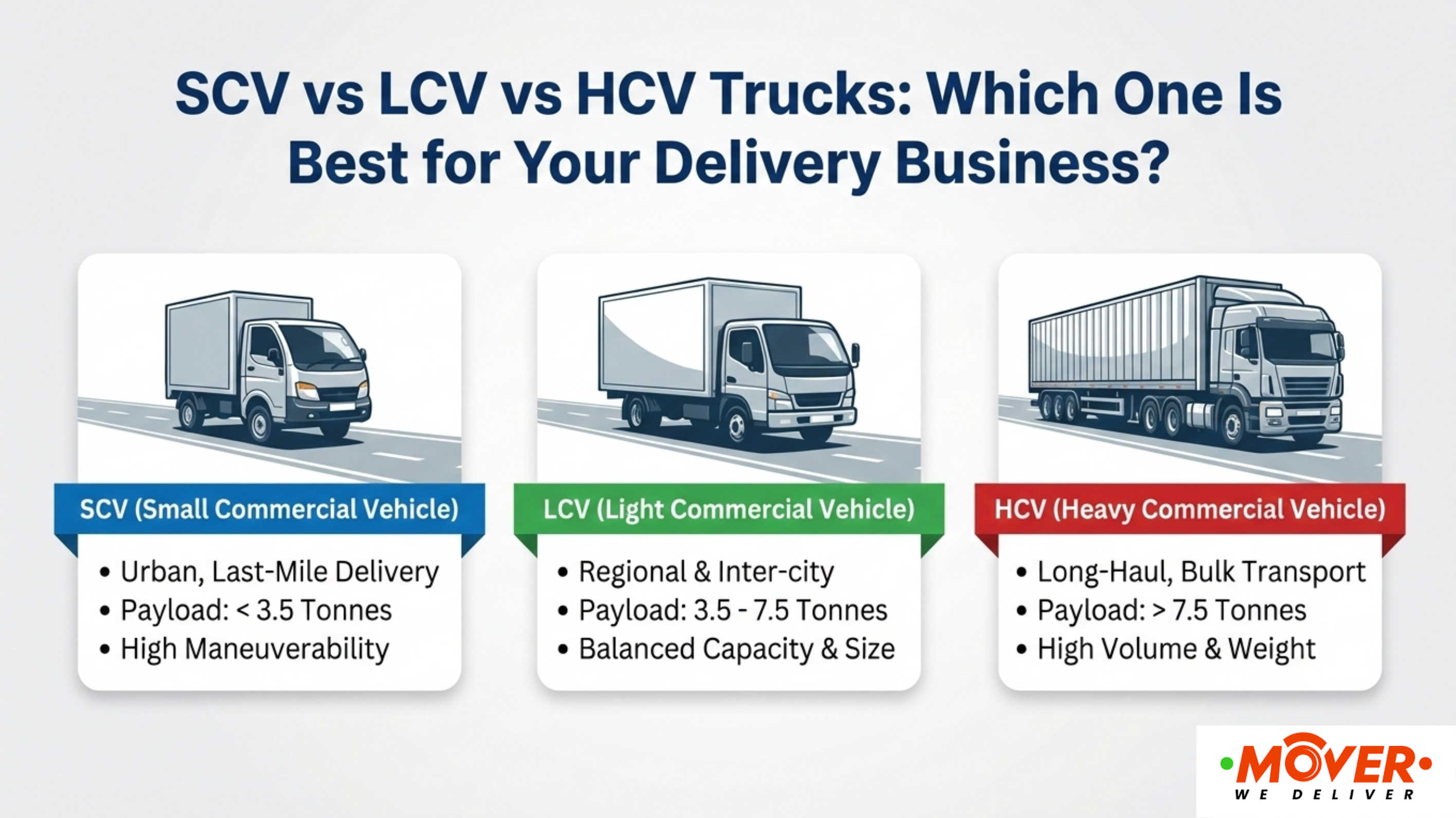
Understanding the SCV, LCV, and HCV full forms is essential before choosing the right vehicle for deliveries or logistics operations. These categories are part of the official commercial vehicle classification in India, mainly based on payload capacity, size, and transport purpose. Each type serves a different business need, and selecting the correct category helps avoid overloading, compliance issues, and unnecessary operating costs.
SCV (Small Commercial Vehicle)
SCV full form stands for Small Commercial Vehicle. These vehicles usually carry light cargo and are designed for short-distance, urban, and last-mile deliveries. Their compact size makes them ideal for narrow city roads, quick pickups, and frequent stop-and-go operations. Delivery businesses often prefer SCVs for local distribution because they offer better fuel efficiency and lower running costs compared to larger trucks.
LCV (Light Commercial Vehicle)
LCV full form means Light Commercial Vehicle. An LCV vehicle is larger than an SCV and is commonly used for regional transport or medium-distance deliveries. LCVs provide higher payload capacity while still being easy to drive and maintain. They are widely used in courier services, FMCG supply, and intercity logistics, where businesses need a balance between load capacity and operating efficiency.
HCV (Heavy Commercial Vehicle)
HCV vehicle full form refers to Heavy Commercial Vehicle. These trucks are built for heavy cargo, long-haul transportation, and industrial logistics. HCVs are used when shipment volumes are large and routes cover long distances. They offer strong load-carrying capacity and are suitable for bulk transport where economies of scale matter more than urban manoeuvrability.
What Is an SCV (Small Commercial Vehicle)?
The SCV full form stands for Small Commercial Vehicle, designed primarily for light cargo and city-based deliveries. The typical payload capacity of SCV, LCV, and HCV vehicles in the SCV category remains under 2 tons, making them ideal for short-distance and last-mile operations. Their compact size allows easy manoeuvrability in narrow streets and heavy traffic zones, reducing delivery time in urban areas.
SCVs are widely used in e-commerce, grocery distribution, and local courier services because of their low running costs and better fuel efficiency. Popular examples include the Bajaj Maxima C, Tata Ace (Chota Hathi) and Mahindra Supro. Businesses comparing diesel options often evaluate the best mileage mini truck in India, while many are now shifting toward electric mini trucks for delivery in India for even lower operating expenses.
What Is an LCV (Light Commercial Vehicle)?
The LCV full form refers to Light Commercial Vehicle, positioned between small city trucks and heavy transport vehicles. An LCV vehicle typically carries between 2 and 8 tons, making it suitable for intercity and regional logistics. LCVs offer higher payload capacity than SCVs while maintaining manageable driving comfort and operational flexibility.
They are commonly used for retail supply chains, FMCG movement, agricultural transport, and courier distribution. Popular models include the Tata 407 and Ashok Leyland Dost, which are considered reliable light commercial vehicles for delivery. For businesses managing mid-mile operations through an online truck booking app, LCVs provide the right balance of capacity and cost efficiency for structured regional transport routes.
What Is an HCV (Heavy Commercial Vehicle)?
The HCV vehicle's full form is Heavy Commercial Vehicle, designed for transporting large volumes of goods over long distances. These trucks typically have a payload capacity of 16 tons or more and are used for bulk cargo movement, industrial supply chains, and interstate logistics operations.
HCVs are commonly seen in warehouse-to-warehouse transportation, manufacturing distribution, and large-scale freight movement, where capacity matters more than city manoeuvrability. Because of their size, they are best suited for highways and long-haul routes rather than urban deliveries.
Popular examples include the Tata LPT series and Ashok Leyland heavy trucks. Among the main heavy commercial vehicle use cases are industrial freight, construction materials, and large-scale FMCG distribution across regions.
SCV vs LCV vs HCV – Key Differences Explained
Understanding the difference between SCV, LCV and HCV helps businesses choose the right vehicle category based on load size, route distance, and operating costs.
The table below clearly explains the SCV vs LCV payload comparison and operational differences.
|
Factor |
SCV |
LCV |
HCV |
|
Full Form |
Small Commercial Vehicle |
Light Commercial Vehicle |
Heavy Commercial Vehicle |
|
Payload |
< 2 tons |
2–8 tons |
16+ tons |
|
Best Use |
Last-mile delivery |
Regional transport |
Long-haul bulk transport |
|
Cost |
Lowest |
Medium |
Highest |
|
Operating Area |
Urban |
Intercity |
Interstate |
|
Fuel Efficiency |
High |
Moderate |
Lower |
|
Business Type |
Hyperlocal delivery |
SME logistics |
Industrial transport |
Payload Capacity of SCV vs LCV vs HCV
Choosing between SCV vs LCV vs HCV vehicles should be based on shipment volume, not truck appearance.
|
Vehicle Type |
Typical Payload |
Ideal Cargo Type |
Risk if Overloaded |
|
SCV |
Under 2 tons |
Small parcels, grocery, and ecommerce |
Suspension damage, fines |
|
LCV |
2–8 tons |
Regional distribution, FMCG |
Permit violations, breakdowns |
|
HCV |
16+ tons |
Bulk freight, industrial cargo |
Heavy penalties, downtime |
Key Business Considerations
-
Overloading leads to fines and route delays
-
An incorrect payload category can violate commercial vehicle registration norms
-
Choosing based on average shipment volume prevents wasted trips
-
Higher payload does not always mean higher profit
This structured approach helps businesses avoid compliance issues while selecting the correct truck category.
SCV vs LCV vs HCV – Which Is Best for Delivery Businesses?
Instead of theory, here’s a practical decision matrix:
Choose SCV If:
-
You operate in dense urban areas
-
Business focuses on last-mile delivery or food delivery
-
You want lower fuel and maintenance costs
-
City congestion impacts route timing (see urban traffic impact on delivery)
Choose LCV If:
-
You move 2–8 tons regularly
-
You handle intercity courier or FMCG distribution
-
You want balanced capacity and operating cost
-
You aim to reduce logistics costs by optimising trip efficiency
Choose HCV If:
-
You transport bulk cargo
-
Routes are interstate or long-haul
-
You serve industrial warehouses
-
Per-trip capacity matters more than urban mobility
Fleet Selection Guide for Logistics Businesses
Choosing the right vehicle category is a strategic decision, not just a transport choice.
-
Logistics businesses should first evaluate average shipment size, because overcapacity increases fuel costs while undercapacity increases trip frequency.
-
Distance also matters; short urban routes suit SCVs, while intercity or long-haul movement needs LCVs or HCVs.
-
Delivery frequency influences cost efficiency, especially for daily dispatch operations.
-
Fuel efficiency, maintenance expense, and driver availability must be considered before finalising fleet type.
-
Structured logistics networks, including systems like MOVER, typically select vehicle categories based on delivery volume, route type, and operational predictability rather than vehicle size alone.
This approach helps businesses optimise utilisation, reduce downtime, and improve overall delivery efficiency.
Common Mistakes While Choosing SCV, LCV or HCV
Many businesses make avoidable fleet selection mistakes that increase costs and reduce efficiency. Common errors include:
-
Choosing oversized trucks for small loads leads to higher fuel and maintenance expenses.
-
Ignoring long-term operating costs and focusing only on the purchase price.
-
Not checking payload regulations, which can create compliance issues similar to common mistakes in commercial vehicle registration.
-
Using HCVs inside congested city routes where smaller vehicles perform better.
-
Selecting vehicles without analysing route patterns or shipment frequency.
Using data-driven planning or an online truck booking app helps businesses match vehicle type with actual delivery demand, improving utilisation and lowering logistics costs.
Final Verdict
Selecting the right commercial vehicle category directly impacts delivery cost, operational efficiency, and long-term scalability. Correct classification reduces fuel waste, avoids payload-related fines, and minimises delivery delays.
Whether a business chooses an SCV, LCV, or HCV, the decision should always align with shipment volume, distance, and route conditions rather than assumptions.
Businesses operating within structured logistics systems like MOVER benefit when vehicle selection matches delivery demand and route type, ensuring smoother operations and better cost control.
This becomes even more effective when combined with online truck booking, allowing businesses to choose the right vehicle category for every shipment and scale logistics operations more efficiently.
FAQs
1. Which vehicle is best for a delivery business?
The best vehicle depends on the delivery type and shipment size. SCVs work best for city deliveries, LCVs suit regional logistics, and HCVs are ideal for bulk long-distance transport operations.
2. What is the payload capacity of SCV, LCV and HCV?
SCVs usually carry under 2 tons, LCVs handle around 2–8 tons, and HCVs are designed for heavy cargo above 16 tons, mainly used for industrial and interstate logistics.
3. Is LCV better than SCV for logistics?
LCVs are better for intercity or regional logistics due to higher payload capacity, while SCVs are more suitable for short-distance, last-mile deliveries where flexibility and fuel efficiency matter more.
4. When should businesses use HCV trucks?
HCV trucks should be used for bulk goods, warehouse transfers, or long-haul transportation where large shipment volumes make heavy commercial vehicles more cost-efficient despite higher operating costs.
5. Which vehicle is best for last-mile delivery?
SCVs are considered best for last-mile delivery because they are compact, easy to drive in urban traffic, fuel-efficient, and suitable for frequent stops and short-distance routes.
6. Are LCV vehicles suitable for e-commerce delivery?
Yes. LCV vehicles are widely used in e-commerce logistics for regional distribution and mid-mile movement, where higher payload capacity is required without shifting to heavy trucks.
7. How do I choose between SCV vs LCV vs HCV?
Choose based on shipment volume, delivery distance, and frequency. Small urban loads favour SCVs, medium regional cargo fits LCVs, and high-volume long-distance logistics require HCVs.
8. Which truck type reduces logistics costs?
The truck that matches your load size reduces costs the most. SCVs reduce costs for small deliveries, LCVs balance efficiency for medium loads, and HCVs lower cost per ton for bulk transport.