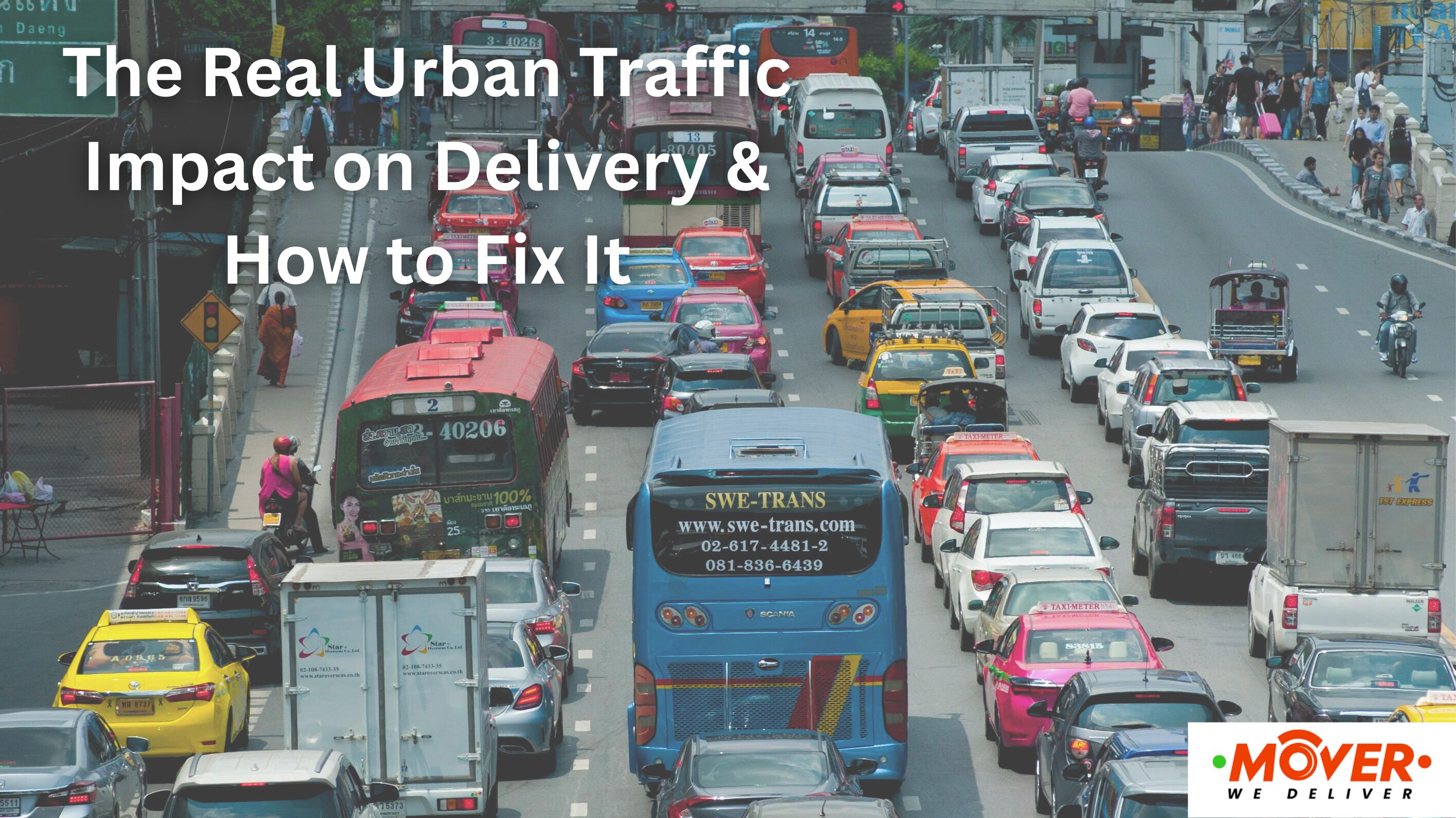

Why do deliveries slow down even when the distance is short as they enter the city? Urban traffic is one of the biggest reasons behind late shipments, higher delivery costs, and rising customer complaints. Today, the Urban traffic impact on delivery is stronger than ever, with peak-hour congestion increasing travel time by around 25–40% in major Indian cities. Slow-moving lanes, random diversions, limited parking, and crowded streets all create serious delivery logistics challenges.
As e-commerce, food delivery, and quick-commerce grow, businesses must find smarter ways to handle traffic congestion and logistics in urban areas. Fast deliveries depend on route planning, real-time tracking, micro-hubs, and better last-mile execution. Improving last-mile delivery efficiency not only reduces delays but also lowers fuel use and operational expenses.
Digital tools and smart planning now help companies reduce delivery time in urban areas, even during peak traffic hours. Platforms like MOVER offer real-time tracking, smart routing, and efficient truck allocation, helping businesses move goods faster in city conditions. This blog explores the real challenges behind urban traffic delays and the solutions that can help cities deliver smarter, safer, and faster.
What Causes Urban Traffic Challenges in Logistics?
These challenges show why businesses must adopt smart delivery solutions, from route optimization to micro-hubs, to maintain speed and accuracy in congested cities. Urban traffic delays happen because cities are not built for high-volume logistics movement. Most major Indian cities face logistics challenges in cities such as:
-
Limited road capacity: Urban roads become overloaded with personal vehicles, buses, autos, and commercial vehicles, making it difficult for deliveries to move smoothly.
-
Peak-hour congestion: Morning and evening traffic can be expected to slow down delivery vehicles by roughly 25–40%, creating unavoidable delays.
-
Parking and loading restrictions: Lack of designated loading zones forces drivers to circle around for parking, increasing fuel use and travel time.
-
Unplanned urban layouts: Narrow streets, one-way routes, and sudden diversions make navigation difficult, slowing down last-mile delivery efficiency.
-
Delivery density: High population density means more deliveries in small areas, which increases stop time and delays.
-
Weather and seasonal factors: Monsoon flooding, heat waves, and fog can reduce city speed by up to 50%, creating more delivery delays due to traffic.
Urban Traffic Impact on Delivery Times
Urban traffic creates direct delays, increases logistics costs, and reduces delivery reliability. These data-backed insights explain how congestion affects overall delivery logistics performance.
1. Increased Travel Time and Costs
Peak-hour congestion increases delivery time a lot, especially in major Indian cities. Drivers spend longer on the road, increasing fuel use, overtime payments, and wear-and-tear costs. Stop-and-go driving and longer distances directly raise maintenance expenses. These transportation challenges also disrupt scheduling, reducing logistics costs, and forcing businesses to deploy more vehicles for the same delivery volume.
2. Last-Mile Delivery Efficiency Drops
The last mile accounts for around 50% of total delivery costs, making it the most sensitive to urban congestion. Narrow streets, high delivery density, and limited curbside loading zones cause vans to idle or take detours. This reduces last-mile delivery efficiency, increases missed slots, and slows down order fulfillment, especially in commercial and residential hotspots.
3. Higher Environmental & Safety Risks
Congested roads elevate pollution levels and raise accident risks for drivers, riders, cyclists, and pedestrians. More time spent navigating tight lanes and unpredictable traffic signals increases the chances of collisions or sudden braking. Ensuring driver and customer safety in logistics becomes challenging during peak traffic windows, especially in densely populated areas.
4. Customer Dissatisfaction & Unpredictability
Traffic unpredictability makes delivery time management difficult for logistics teams. Same-day and next-day deliveries become harder to meet, creating uncertainty for customers. Even small delays multiply across routes, reducing reliability and increasing failed delivery attempts. This directly impacts brand credibility and customer loyalty.
Smart Ways to Reduce Delivery Time in Urban Areas
Here are proven strategies logistics companies use to improve delivery speed despite city congestion:
-
AI-driven route optimization: Adjusts routes automatically to avoid slow-moving roads and congestion clusters.
-
Dynamic routing using live traffic data: Helps drivers reroute instantly during road closures or peak jams.
-
Urban micro-hubs: Shorten last-mile routes by storing inventory closer to customers.
-
Delivery consolidation: Combines shipments going to the same area, reducing the number of trips.
-
Electric vans & cargo bikes: Ideal for dense urban zones; bypass narrow lanes and reduce fuel-related delays.
-
Night-time/off-peak deliveries: Reduce the impact of congestion and speed up movement through quieter streets.
-
Smart parking & curbside loading zones: Cut the time drivers spend searching for parking.
-
Geofencing for timed delivery windows: Ensures smoother entry and exit in gated communities or corporate blocks.
-
Avoiding congestion hotspots: Uses heatmaps to identify zones to skip during peak times.
-
Driver monitoring via telematics: Improves driving patterns, reduces idle time, and increases route discipline.
Technology’s Role in Managing Urban Delivery Challenges
Technology transforms how businesses manage urban congestion and maintain safe logistics operations:
-
Real-time tracking: Provides full visibility of vehicle movement for faster decision-making.
-
IoT sensors: Monitor temperature, package movement, traffic conditions, and vehicle health.
-
Traffic heatmaps: Identify slow zones and dynamic city patterns to avoid delays.
-
Fleet management dashboards: Enable dispatch teams to monitor multiple deliveries at once and optimize routes.
-
Automated dispatching: Automatically assigns the nearest available vehicle to reduce wait time.
-
Digital proof of delivery (e-POD): Ensures faster verification and reduces disputes or failed deliveries.
How MOVER Delivery Solutions Reduce Urban Traffic Impact?
MOVER uses smart technology to reduce delays caused by urban congestion. Its AI route planning selects the fastest paths and avoids traffic hotspots. Real-time driver tracking improves visibility and helps teams manage unexpected roadblocks. With smart vehicle allocation, the nearest and most suitable vehicle is assigned instantly, reducing wait times.
This online truck booking app also speeds up last-mile delivery with optimized routes and lighter vehicles for dense zones. By cutting idle time and avoiding congested areas, MOVER boosts city logistics optimization while keeping customer communication clear and transparent.
Practical Tips for Businesses to Improve Urban Delivery Logistics
Here are simple practices businesses can apply to handle logistics challenges in cities:
-
Plan routes avoiding school and office rush hours.
-
Use micro-hubs near high-demand areas for quicker dispatch.
-
Pre-schedule deliveries during non-peak hours.
-
Choose lighter vehicles for narrow or crowded lanes.
-
Consolidate multiple deliveries going to similar zones.
-
Use real-time traffic data for instant rerouting.
-
Keep buffer time for unpredictable congestion.
-
Train drivers on safe urban navigation.
-
Set customer time windows to reduce failed attempts.
-
Track vehicle performance to improve delivery time management.
Future of Urban Delivery Logistics
The future of city logistics is shifting toward online booking from traditional methods that minimize traffic-related delays. Autonomous delivery robots and drone pilots are being tested to bypass congestion entirely. Major metros are rapidly adopting electric delivery vehicles, opening more transport hubs that are better suited for short, frequent urban routes.
AI will play an even bigger role, predicting traffic patterns in advance and optimizing every delivery slot. Cities are introducing policies like congestion-free corridors, smart parking zones, and digital freight permissions to reduce urban pressure. As demand for fast delivery grows, these innovations will help logistics companies improve speed, safety, and sustainability in crowded urban environments.
Final Verdict
Understanding the urban traffic impact on delivery helps businesses reduce delays, cut fuel costs, and improve customer satisfaction. With smarter planning, better routes, and tech-led optimization, companies can overcome city congestion and boost efficiency.
MOVER makes this easier by providing AI-powered routing, real-time visibility, and fast last-mile delivery. For businesses facing daily traffic challenges, MOVER offers a reliable, scalable, and tech-driven solution to keep deliveries on time, even in the busiest urban zones.
FAQs on Urban Traffic Impact on Delivery
1. What is the urban traffic impact on delivery?
Urban traffic slows delivery vehicles, increases travel time by 25–40%, raises fuel costs, and reduces last-mile efficiency in busy city zones.
2. Why do delivery delays due to traffic happen in cities?
Delivery delays happen due to congestion, narrow roads, limited loading zones, and peak-hour traffic that slow down vehicles and increase operational time.
3. How does traffic affect last-mile delivery efficiency?
Traffic reduces last-mile delivery efficiency by increasing stopping time, reducing average speed, and making it harder to reach customers on time.
4. What are the major logistics challenges in cities?
Key challenges include congestion, unpredictable traffic, parking shortages, high fuel wastage, restricted delivery windows, and rising urban transportation demands.
5. How can businesses reduce delivery time in urban areas?
Businesses can use AI route optimization, micro-hubs, real-time traffic data, smaller vehicles, and off-peak delivery windows to reduce delivery time.
6. How does congestion impact delivery logistics costs?
Congestion increases fuel use, driver hours, vehicle wear, and failed deliveries—significantly raising overall delivery logistics expenses in cities.
7. What smart delivery solutions help with urban transportation challenges?
AI routing, dynamic scheduling, cargo bikes, EVs, curbside loading zones, and automated dispatching help solve urban transportation challenges.
8. How does technology improve delivery safety in cities?
Technology improves driver and customer safety through GPS tracking, geofencing, telematics, and real-time alerts that prevent risky road situations.
9. What role do micro-hubs play in city logistics optimization?
Micro-hubs shorten final delivery distance, reduce congestion, enable faster dispatch, and improve last-mile delivery efficiency in dense city areas.
10. How do MOVER delivery solutions help with city traffic delays?
MOVER reduces delivery delays using AI-based routing, smart driver allocation, real-time tracking, and congestion-avoidance tools that speed up urban deliveries.