

Summary
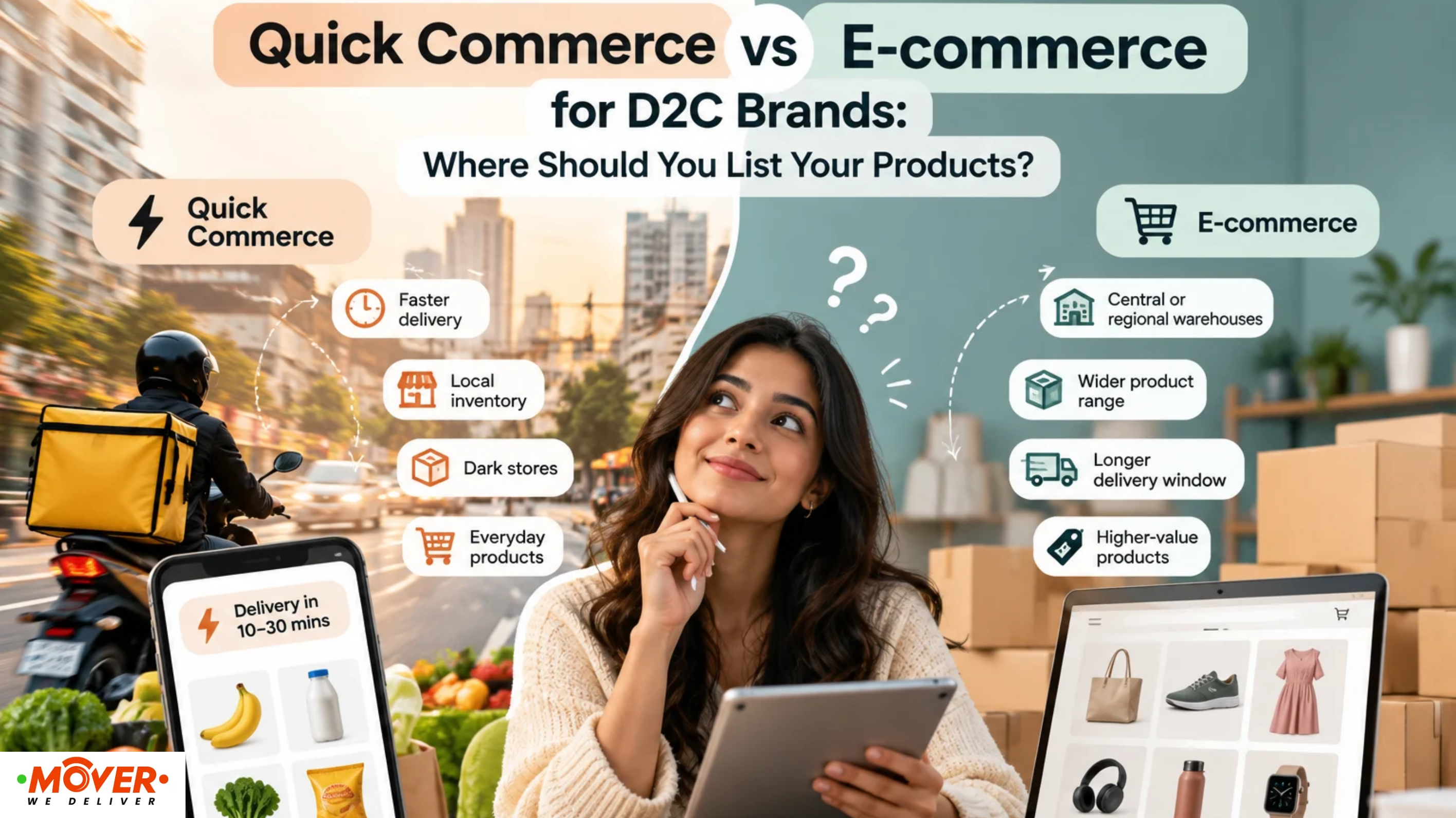
For D2C brands, the products you list on each channel can be different. Fast-moving products that customers need quickly can go on quick-commerce platforms. Products with a wider range, higher value, or longer buying cycles can stay on traditional e-commerce. Quick commerce uses local inventory and dark stores to deliver products faster, while e-commerce usually relies on central or regional warehouses. Costs can also vary depending on commissions, delivery charges, order value, inventory, and fulfilment. Many brands can use both channels by listing selected SKUs on quick commerce and keeping their full range on e-commerce. As the business grows, good inventory planning, fulfilment, transportation, and delivery coordination become important.
Introduction
Do you want to launch your new product but you are confused between quick commerce vs e-commerce? Well, one of the most difficult decisions as an entrepreneur is deciding how your product reaches the customer’s hands. You can choose traditional e-commerce, where you can offer a wider product range, more delivery locations, and a little more time to decide. Or you can go with quick-commerce, through which customers are expected to get their orders within a few minutes at the doorstep.
As per Redseer Strategy Consultants Pvt. Ltd. India’s online retail market has already reached around $80 billion, with quick commerce accounting for about 17% of online retail GMV in FY26 and growing at roughly 120% year-on-year. Whereas the e-commerce market is dominating, with roughly 70% of that GMV.
The platform you choose for your product is not about the market share of the platform or how fast it can deliver to the customers. That’s based on things like average order value, product type, delivery expectations, inventory setup, margins, and target customers.
So let’s get into the differences between quick commerce vs e-commerce for D2C brands. The costs of each model, how fulfilment works, how delivery changes and where each is the best fit.
Quick Commerce vs E-Commerce: What’s the Difference?
One of the biggest differences is where the product sits before someone orders it. In other words, how the order reaches the customer.
If you want to get your order urgently, then with quick commerce, products are kept closer to customers so they can be picked, packed, and delivered within a very short window. That usually means distributing inventory across multiple nearby locations.
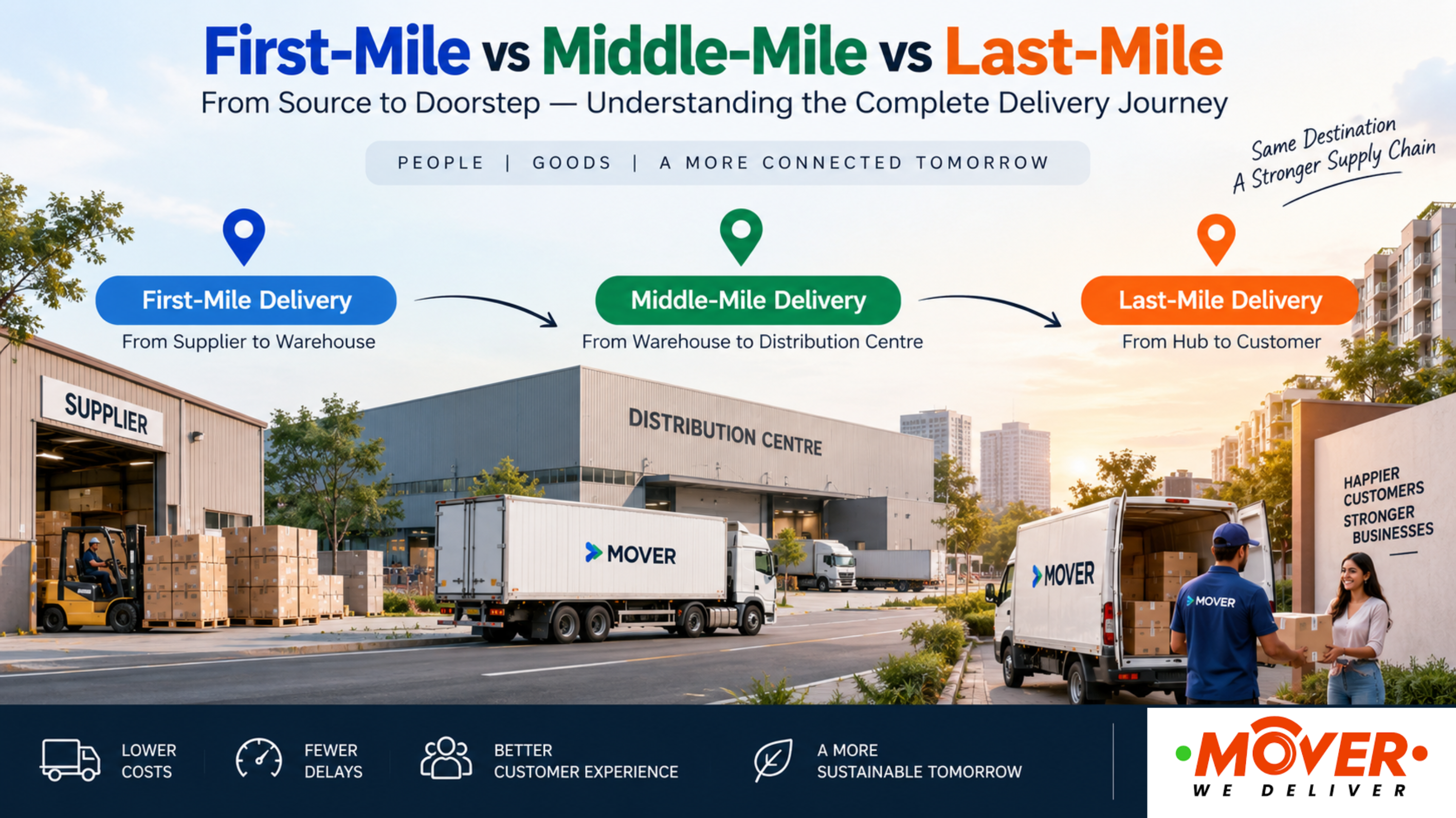
On the other hand, in traditional e-commerce, products can stay in larger warehouses, where brands can manage a much wider catalogue before shipping orders across different cities and regions. There are multiple stages, from first-mile movement to middle-mile transportation and finally last-mile delivery to reach the customers.
That difference also changes the cost of fulfilment and delivery.
For a D2C brand, understanding this difference is important because delivery speed isn't the only thing that changes. But it also impacts inventory planning, operating costs, order values, and fulfilment requirements change too.
For example, think about two customers buying from the same D2C brand. One orders a full-size skincare kit and is happy to wait a few days. The other needs just one product today and expects it within minutes.
The product may come from the same brand, but the way it reaches the customer can be completely different.
|
Difference |
Quick Commerce |
E-Commerce |
|
Delivery time |
Around 10–30 minutes |
Usually 1–7 days |
|
Fulfilment setup |
Dark stores or nearby micro-warehouses |
Central or regional warehouses |
|
Product range |
Smaller, fast-moving selection |
Wider catalogue |
|
Customer need |
Urgent, regular, or impulse purchases |
Planned or considered purchases |
|
Typical reach |
Mainly dense urban areas |
Wider geographic coverage |
|
Inventory |
Stock kept close to customers |
Stock concentrated in fewer locations |
|
Delivery model |
Hyperlocal, short-distance delivery |
Longer-distance, scheduled delivery |
Cost Comparison: Quick Commerce vs E-Commerce
Speed sounds great until you look at what it takes to make that speed possible.
With quick commerce, a product has to be stored close to the customer, picked quickly, packed, and handed over to a rider within minutes. Traditional e-commerce gets more time to consolidate orders, move inventory in larger quantities, and deliver over a longer window.
One number stands out: a Grant Thornton Bharat survey of more than 1,500 users found that delivery can consume around 50 - 70% of gross margin in quick commerce. That doesn't mean every D2C brand will face the same margin impact, but it shows how expensive ultra-fast fulfilment can become.
There is also a clear difference in market size. India's quick-commerce market is set to reach around $3.65–$7.46 billion in 2026. While the D2C e-commerce market is expected to reach around $108.76 billion in 2026.
So, the question isn't simply “Which one is cheaper?”
It’s about the product you sell, the typical order of the customer, the place you store your inventory and how much you are willing to pay to meet the delivery expectations of the customer.
|
Cost & Operations |
Quick Commerce |
Traditional E-Commerce |
Source |
|
Platform commission |
15–28% (base), up to 35% with GST + fulfilment fees stacked on |
0–5% own site; 15–25% marketplaces |
EcomSarthi for the base commission table; Braincuber for the "true" stacked cost |
|
Delivery cost per order |
₹20–₹40 (Blinkit/Zepto hyperlocal) |
₹45–₹120 forward freight — matches your table exactly |
|
|
Average order value |
₹250-₹450(Blinkit/Zepto hyperlocal) |
Typically ₹700+ |
|
|
Delivery speed |
10–20 min |
1–7 days |
General industry consensus, no single citation needed |
|
Inventory setup |
Dark stores |
Central/regional warehouses |
|
|
Order fulfilment |
Immediate pick/dispatch |
Processed/consolidated before dispatch |
Where Does Each Model Fit for D2C Brands?
The order platform depends on when the customer needs it. As customers don’t need everything immediately, but sometimes can’t wait a week for the order as well.
For instance, a customer who has run out of face wash may want a replacement today. Someone buying a complete skincare kit, however, may take more time to compare products, check reviews, and choose the right option.
That difference becomes important when you're deciding how different products should be fulfilled.
Quick Commerce Makes Sense When:
-
You need your order regularly.
-
When customers want small orders.
-
Fast delivery adds real value to the purchase.
-
Your products work well for impulse or convenience-led purchases.
-
Most of your customers are in areas with quick-commerce coverage.
-
You have a focused set of SKUs that can be stocked locally.
Snacks, beverages, personal care, beauty essentials, and household products are some examples where this model can fit naturally. A D2C brand with fast-moving products may, for instance, use platforms such as Blinkit to make those products available for quick local delivery.
| Related read - How to Register as a Blinkit Seller?
The same approach can work for brands that want to test a smaller selection rather than putting their entire catalogue into quick commerce. A beauty brand might keep its popular everyday products available through Zepto, while continuing to sell its complete range through its website.
| Related read - How to Register as a Zepto Seller?
Traditional E-Commerce Makes Sense When:
-
You have a larger or more varied product catalogue.
-
Customers usually research or compare products before buying.
-
Your average order value is higher.
-
Your products don't need immediate delivery.
-
You want to reach customers across a wider geographic area.
-
You need more control over the shopping experience.
A D2C brand selling furniture, premium fashion, electronics, specialised beauty products, or larger bundles may not need a 20-minute delivery promise. In these cases, customers may care more about product variety, pricing, detailed information, delivery coverage, and returns.
Can D2C Brands Use Both?
They can, and this can be useful when different products have different buying patterns.
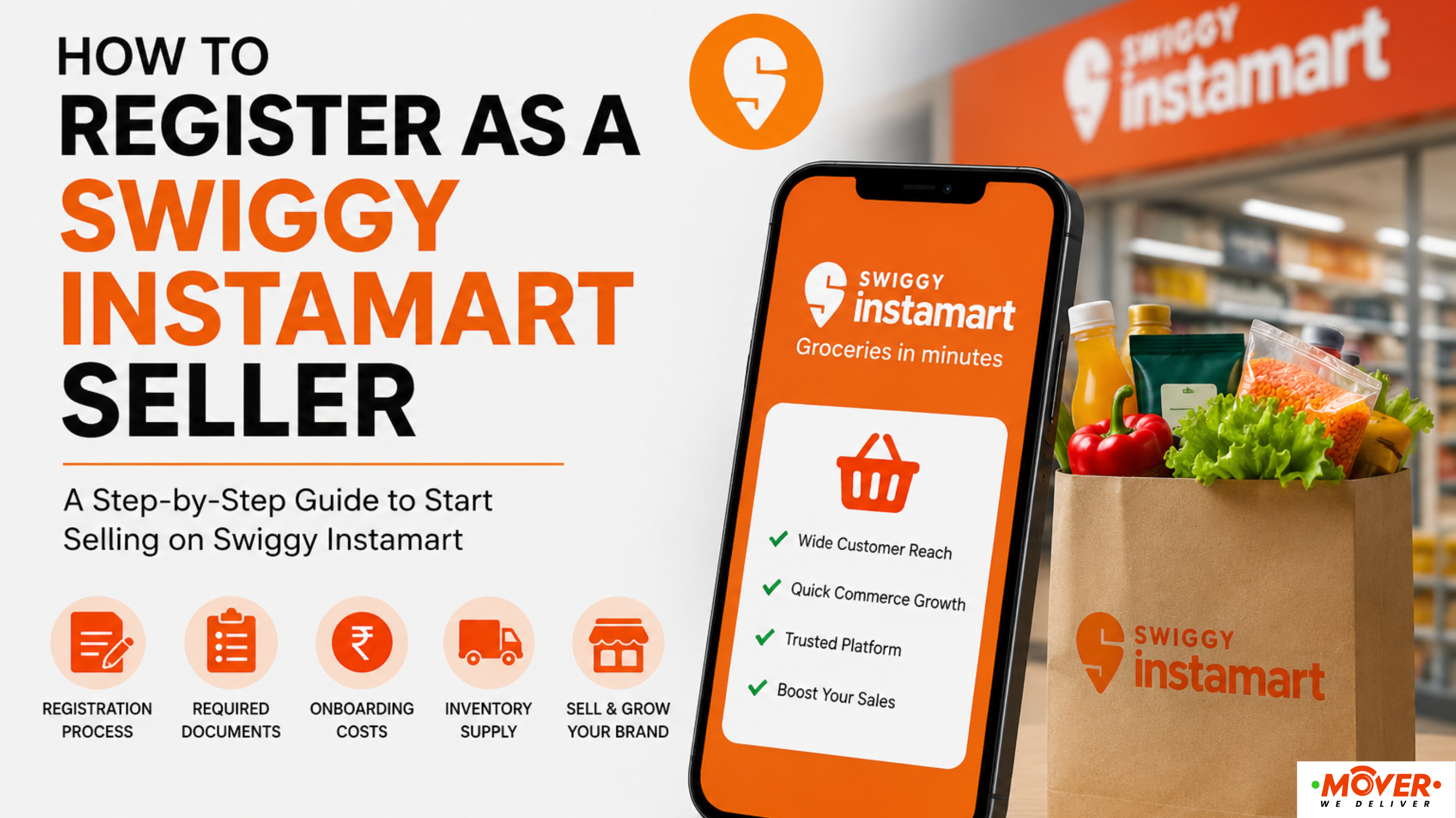
For example, a D2C food brand could keep its frequently reordered products on quick-commerce channels while using its own website for larger combos, subscription packs, or products with a wider selection. Depending on its target market, it could also make selected SKUs available through Swiggy Instamart without shifting its entire fulfilment operation to quick commerce.
| Related read - How to Register as a Swiggy Instamart Seller?
So, quick commerce and e-commerce don't necessarily have to compete for the same products. One can handle speed-sensitive purchases while the other handles wider selection, planned purchases, and broader geographic reach.
That difference becomes even clearer when you look at what happens behind the scenes: where the inventory is stored, how orders are picked, and how products move to the customer.
D2C Fulfilment: What Changes Operationally?
The customer may only see a “Place Order” button, but there is a lot happening before that order reaches the doorstep. The major difference between quick commerce and traditional e-commerce when it comes to operations is how they manage and keep their stock.
Traditional E-Commerce Fulfilment
A typical e-commerce setup may look something like:
Brand → Central/Regional Warehouse → Delivery Partner → Customer
With these platforms, you will get more time to manage your stock, shipments and transportation. This setup works well when you have:
-
A large product catalogue
-
Higher-value orders
-
Customers spread across different cities
-
Products that don't need immediate delivery
-
More predictable or scheduled order volumes
Quick-Commerce Fulfilment
The process looks quite different:
Brand/Distributor → Multiple Dark Stores → Rider → Customer
In this model, the inventory planning becomes more local. A product can be available in one neighbourhood but unavailable in another if stock has not been replenished there.
Inventory Management Becomes More Important
For a D2C brand, putting a product on another sales channel isn't simply a matter of adding a new listing. It is very important that you keep a record of what, where and how much inventory is left of your product in the warehouses and dark stores.
The details of D2C product listing should be mentioned correctly, such as product size, pricing, availability, pack options, and other information customers need before placing an order.
Delivery Operations Are Different Too
Traditional e-commerce generally gives you more flexibility around transportation and delivery timelines. You can work with different delivery partners, plan movement between locations, and use scheduled transportation for larger or consolidated shipments.
Quick commerce depends much more heavily on local fulfilment and hyperlocal delivery. As soon as these platforms want to deliver the order, it becomes more important to manage the stock and delivery partner’s availability.
For brands comparing delivery-partner options for their e-commerce operations, factors such as service coverage, vehicle availability, delivery timelines, shipment volume, and operating cost can help determine which setup fits the business.
This is also where choosing between different delivery partner alternatives can become relevant, particularly when a D2C brand needs more flexibility than a standard parcel network provides.
So while the customer sees the same final step order delivered to the doorstep, the operations behind that delivery can be very different.
Delivery & Fulfilment Support for D2C Brands
Now that we have discussed both the models briefly, it is very clear that the handling and delivery of your product is completely different from one another. Quick commerce allows customers to order at the last minute, whereas traditional e-commerce offers flexibility to move their product.
For a D2C brand, the focus should be more on making their product available at the right location and platform as per their demand and target audience.
This can involve:
-
Moving inventory between different locations
-
Handling larger or consolidated shipments
-
Arranging scheduled transportation
-
Managing vehicle capacity during high-order periods
-
Covering multiple delivery locations
-
Keeping transportation costs under control
For D2C brands, choosing the right transportation setup becomes particularly important as order volumes and fulfilment locations increase. The delivery model needs to match the size of shipments, movement between locations, delivery timelines, and available vehicle capacity.
For brands looking for e-commerce delivery for D2C brands, MOVER can support transportation requirements beyond standard parcel movement, including dedicated vehicles and planned movement of goods between locations.
This keeps the comparison practical: quick commerce is built around hyperlocal, platform-led fulfilment, while traditional D2C e-commerce can involve a wider transportation network that brands have more flexibility to manage.
Conclusion
Quick commerce and traditional e-commerce are built around different delivery expectations.
Where quick commerce brings products closer to customers and focuses on speed, making it suitable for fast-moving and frequently needed products. On the other hand, traditional e-commerce works around broader catalogues, longer delivery windows, and wider geographic reach.
For a D2C brand, the difference shows up in more than delivery time. Commission, order value, inventory placement, fulfilment, transportation, and customer expectations can all affect the overall cost and operations.
The two models also don't always have to be treated as alternatives. A brand can use quick commerce for selected products that customers often need immediately, while continuing to use traditional e-commerce for its wider catalogue and planned purchases.
As order volumes grow, brands may also need to rethink how products move between warehouses, fulfilment centres, and other locations. In such cases, online truck booking can make it easier to arrange transportation according to shipment and vehicle requirements.
For businesses managing transportation at scale, an online truck booking app can also simplify vehicle access and make scheduled movement easier to coordinate.
Ultimately, the choice comes down to what you sell, where your customers are, and how they prefer to buy.
FAQs
1. What affects the profitability of a quick-commerce order?
The biggest factors are usually the order value, platform commission, fulfilment cost, delivery cost, and the amount of margin left after these expenses. Smaller baskets can make these costs more noticeable because the same operational expense is spread across a lower-value order.
2. Should every D2C SKU be available through quick commerce?
Not necessarily. Brands can start with products that have consistent demand, move frequently, and make sense for smaller, faster purchases. Keeping the entire catalogue in local fulfilment locations can also increase inventory complexity.
3. What happens when the same product is sold through multiple channels?
Inventory becomes harder to manage because the brand needs visibility into stock across its own website, marketplaces, warehouses, and quick-commerce locations. Accurate availability and product information help prevent situations where an order is placed for stock that is no longer available.
4. Does average order value matter when choosing a fulfilment model?
Yes. Order value can have a direct impact on delivery economics. A ₹400 order and a ₹1,500 order may require similar fulfilment steps, but the delivery and fulfilment cost represents a very different share of the order value. The cost comparison in this article also shows a lower typical AOV for quick commerce than traditional e-commerce.
5. What is one of the biggest operational challenges of quick-commerce fulfilment?
Keeping inventory available close to customers can be challenging. Instead of monitoring stock in only a few warehouses, brands may need to manage replenishment across several local fulfilment points. A product can therefore be available in one location and unavailable in another.
6. How can D2C brands manage transportation when they have multiple fulfilment locations?
As the number of locations grows, brands may need planned movement of goods between warehouses, fulfilment centres, or other locations. Transportation requirements can then depend on shipment volume, vehicle capacity, service coverage, and delivery timelines rather than just individual customer orders.
7. Is it possible to use quick commerce only for selected products?
Yes. A brand can keep its high-frequency or speed-sensitive products on quick-commerce channels while continuing to sell its broader catalogue through traditional e-commerce. This can allow different products to follow different fulfilment routes without changing the entire business model.
8. What should brands monitor after adding a quick-commerce channel?
Beyond sales, brands should keep an eye on stock availability, order value, fulfilment costs, delivery costs, commissions, and the performance of individual SKUs. Looking at these together gives a clearer picture of whether a channel is working operationally as well as commercially.
9. Can delivery costs take a significant share of D2C margins?
They can, particularly in quick commerce where orders need to be fulfilled and delivered within very short windows. The Grant Thornton Bharat survey cited in the article found that delivery could consume around 50 - 70% of gross margin in quick commerce.
10. When does an online truck booking app become relevant for a D2C business?
It becomes more relevant when a brand needs vehicles for planned transportation of goods between warehouses, fulfilment locations, or other business points. This is different from the last-mile parcel delivery associated with an individual customer order.
11. What is the biggest mistake D2C brands can make when expanding into quick commerce?
Treating quick commerce as simply another sales listing. The channel can require changes to inventory distribution, SKU selection, replenishment, fulfilment, and delivery planning, so the operational side needs to be considered along with the sales opportunity.
12. What is the difference between local fulfilment and centralised fulfilment?
Local fulfilment keeps selected inventory close to the customer so orders can be dispatched quickly. Centralised fulfilment keeps a larger amount of inventory in fewer locations and then moves products to customers through a wider transportation network.