
What happens when the people delivering food, groceries, and parcels across Indian cities struggle to earn stable incomes themselves? As India’s gig economy continues to expand, millions of delivery riders and logistics workers are becoming the backbone of urban convenience. From food delivery apps to hyperlocal logistics platforms, gig workers now play a major role in keeping daily operations running smoothly.
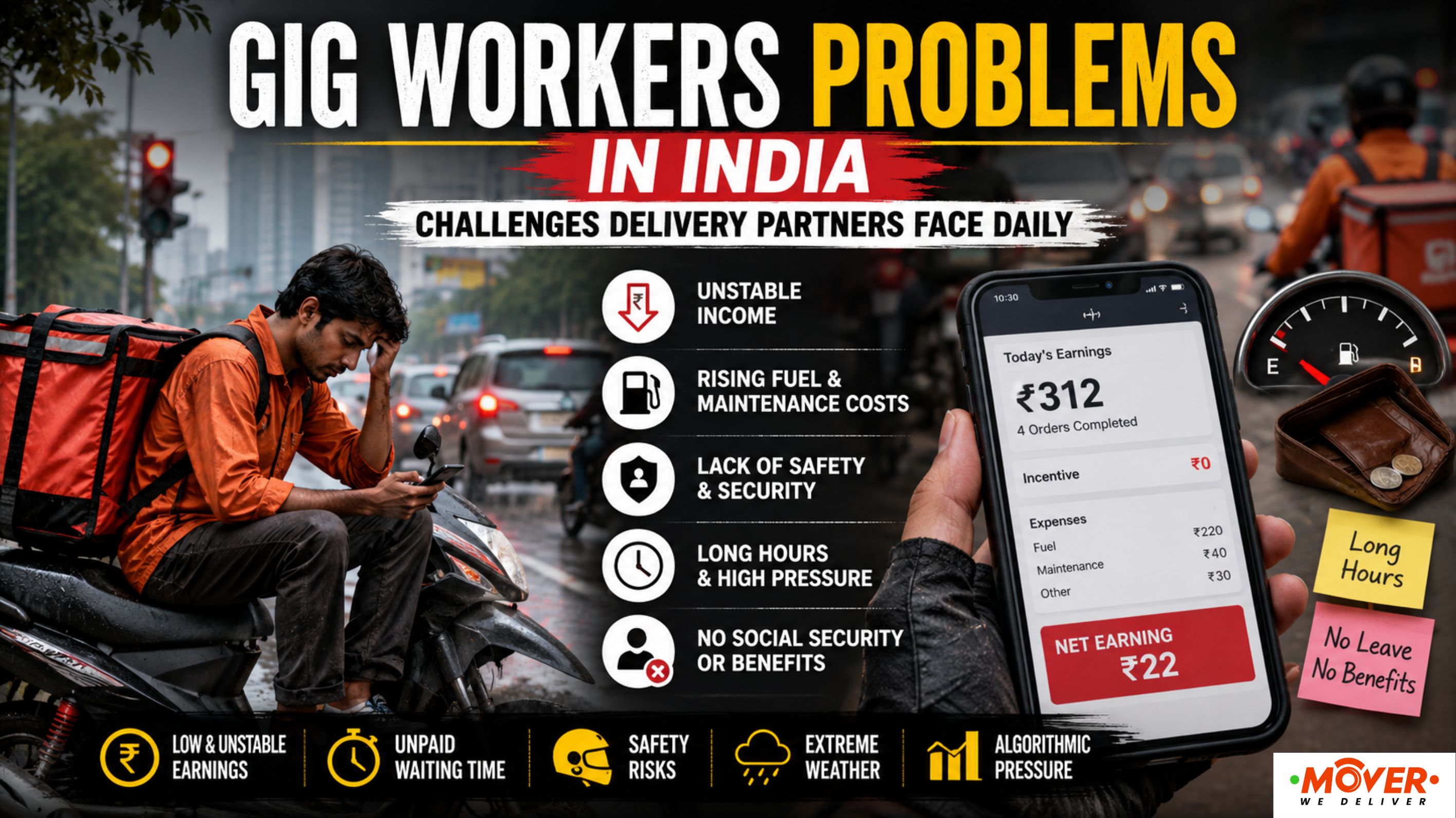
However, behind the fast deliveries and app-based convenience lies a different reality. Many workers face unstable income, rising fuel expenses, long working hours, and constant pressure to meet aggressive delivery timelines. According to reports highlighted by the Business & Human Rights Resource Centre, gig workers associated with logistics platforms often deal with fluctuating payouts, unpaid waiting time, and limited access to social security or healthcare support.
The rapid growth of quick commerce and delivery services has created more earning opportunities, but it has also increased physical, financial, and mental pressure on workers. In this blog, we explore the biggest gig worker problems in India, especially the daily challenges faced by delivery partners and logistics workers.
Biggest Problems Gig Workers Face in India
As the gig economy grows rapidly, workers across delivery and logistics platforms continue to face multiple operational and financial challenges. While these jobs offer flexibility and quick earning opportunities, the lack of stability and support systems creates long-term difficulties for many workers.
1. Unstable and Fluctuating Income
One of the biggest challenges faced by gig workers is inconsistent income. Payouts and incentives often change without prior notice, making monthly earnings unpredictable. Workers also experience reduced take-home income due to rising fuel prices and maintenance expenses, especially in delivery-based jobs.
2. Long Unpaid Waiting Hours
Gig workers frequently spend significant time waiting at pickup hubs, warehouses, or restaurants without compensation. These idle hours reduce productivity and affect overall earnings, particularly for workers who rely on completing more tasks to maintain stable income levels.
3. Algorithmic Penalties and Account Restrictions
Many platforms use automated systems to assign tasks, monitor ratings, and manage worker accounts. Delivery partners can face sudden penalties, reduced order allocation, or even temporary account suspension without proper explanation or grievance support.
4. Rising Fuel and Vehicle Maintenance Costs
Fuel prices and regular vehicle servicing directly impact gig workers’ net income. For delivery riders using personal vehicles daily, maintenance costs become a major financial burden over time.
5. Lack of Social Security and Employee Benefits
Most gig workers operate as independent contractors, which means they usually do not receive benefits such as paid leave, health insurance, or retirement support. This lack of security becomes especially difficult during emergencies or health-related issues.
6. Delayed Payments and Cash Flow Issues
In some cases, payout cycles are delayed, creating financial stress for workers who depend on daily or weekly earnings to manage fuel, rent, and household expenses. Immediate cash flow remains a major concern in the gig economy.
Problems of Delivery Partners in India
Delivery partners face additional challenges beyond income instability because their work depends heavily on speed, traffic conditions, customer ratings, and strict delivery timelines. The pressure to complete more deliveries within limited time often affects both physical health and overall job satisfaction.
1. Pressure to Meet Unrealistic Delivery Timelines
Many delivery platforms prioritize faster deliveries to stay competitive, especially with the rise of quick commerce. As a result, delivery riders are expected to complete orders within strict timelines, often leading to stress, unsafe driving, and fatigue. The growing demand for same day delivery in India has further increased operational pressure on delivery workers.
2. Traffic Stress and Road Congestion
Delivery riders spend most of their day navigating crowded city roads, traffic jams, and unpredictable route conditions. Constant exposure to traffic not only slows deliveries but also increases frustration, fuel consumption, and physical exhaustion. In major cities, urban traffic significantly impacts delivery, affecting both productivity and worker well-being.
3. Exposure to Extreme Weather Conditions
Unlike traditional office jobs, delivery work continues regardless of weather conditions. Riders often work under intense heat, heavy rain, or winter conditions, making daily operations physically exhausting and sometimes unsafe.
4. Higher Risk of Road Accidents
The pressure to deliver quickly, combined with long riding hours, increases the chances of accidents. Delivery partners face daily road safety risks, especially in high-traffic urban areas where maintaining strict delivery timelines becomes difficult.
5. Customer Ratings and Performance Pressure
Many platforms track delivery partners through ratings and performance metrics. A few negative reviews or delayed deliveries can impact incentives, order allocation, or platform visibility, adding constant pressure to maintain high performance.
Gig Worker Safety and Security Issues
One of the biggest concerns in India’s gig economy is the lack of proper safety and security support for workers. Since most delivery partners and logistics workers operate independently, they often have limited protection during emergencies or accidents.
1. Limited Access to Insurance and Accident Coverage
Many gig workers lack adequate insurance coverage, despite spending long hours on the road each day. In case of accidents, medical expenses and vehicle repair costs often become the worker’s responsibility. Understanding the insurance requirements for delivery bikes and goods vehicles becomes essential for workers relying on personal vehicles for income.
2. No Paid Leave or Emergency Support
Unlike traditional employees, gig workers usually do not receive paid sick leave or emergency compensation. Missing work due to illness or accidents directly impacts their earnings, creating financial stress during difficult situations.
3. Healthcare and Medical Challenges
Continuous riding, physical fatigue, and exposure to pollution can affect workers’ health over time. However, many gig workers lack access to proper healthcare benefits or affordable medical support through the platforms they work for.
4. Vehicle Damage and Repair Burden
Delivery riders using personal vehicles are fully responsible for maintenance and repairs. Frequent usage increases wear and tear, and unexpected repairs can reduce monthly savings significantly.
5. Safety Concerns During Late-Night Deliveries
Workers handling late-night or remote-area deliveries may face personal safety risks, especially in unfamiliar locations. Limited emergency support systems make such situations more challenging for gig workers.
Why Gig Workers Struggle Financially?
Even though gig jobs create earning opportunities, many workers still struggle to achieve financial stability. Daily operational costs, inconsistent payouts, and unpredictable demand make it difficult for workers to maintain steady savings or long-term financial security.
1. Fuel and Daily Operating Expenses
Fuel costs are one of the biggest expenses for delivery riders and transport workers. Since most gig workers use personal vehicles, rising petrol prices directly reduce their take-home income. Regular expenses such as mobile recharge, servicing, and parking charges further increase daily operational costs.
2. High Vehicle Maintenance Costs
Continuous usage of bikes and delivery vehicles leads to frequent repairs and servicing. Tyre replacement, engine maintenance, and battery issues can significantly affect monthly savings. Choosing efficient options such as best mileage bikes can help reduce fuel and maintenance expenses over time.
3. Changing Incentives and Payout Structures
Many platforms frequently modify incentive structures, delivery targets, and payout calculations. Workers often struggle to predict actual earnings because bonuses and incentives depend heavily on demand, ratings, and platform policies.
4. Downtime Between Orders Reduces Earnings
Gig workers only earn when active tasks are available. Long waiting periods between deliveries or low-demand hours reduce productivity and directly impact daily income, especially for full-time workers who depend entirely on app-based jobs.
5. Difficulty in Building Long-Term Savings
Due to unstable cash flow and recurring expenses, many gig workers find it difficult to save money consistently. Unexpected costs such as vehicle repairs or medical emergencies can further increase financial pressure. Understanding strategies around earnings on delivery partner apps in India can help workers manage income more efficiently.
Mental and Physical Stress in Gig Work
Beyond financial struggles, gig workers also face continuous physical and mental pressure due to demanding schedules, delivery targets, and performance expectations. Over time, this stress can affect both health and work efficiency.
1. Long Working Hours and Physical Exhaustion
Many delivery partners work for extended hours to complete more orders and increase earnings. Continuous riding, lifting packages, and spending hours on the road can lead to fatigue, body pain, and long-term health issues.
2. Pressure to Maintain Ratings and Performance
Gig workers are constantly monitored through ratings, delivery speed, and customer feedback. Poor ratings or delayed deliveries can affect order allocation and incentives, creating ongoing stress and anxiety for workers trying to maintain consistent performance.
3. Burnout Due to Continuous Work Pressure
The combination of traffic, delivery deadlines, weather exposure, and income pressure often leads to mental burnout. Many workers continue working despite exhaustion because taking breaks directly affects their earnings.
4. Stress from Unpredictable Work Conditions
Daily income depends heavily on demand, platform algorithms, and order availability. This uncertainty creates mental stress, especially for workers who rely entirely on gig work as their primary source of income.
5. Limited Work-Life Balance
Gig workers often work during weekends, holidays, and peak hours to maximize earnings. Irregular schedules and long shifts can reduce personal time and affect overall work-life balance.
Why Do Gig Workers Feel Replaceable in the App Economy?
One of the less visible but deeply frustrating aspects of gig work is the feeling of being easily replaceable. Since most platforms operate through automated systems and app-based performance tracking, many workers feel they have limited control over their work conditions and long-term stability.
1. Heavy Dependence on App Algorithms
Task allocation, incentives, and performance tracking are largely controlled by platform algorithms. Workers often do not fully understand how orders are assigned or why payouts suddenly change, creating confusion and uncertainty around earnings.
2. Fear of Sudden Account Suspension
Many gig workers worry about sudden account restrictions or temporary ID blocks caused by customer complaints, low ratings, or system-generated penalties. In several cases, workers struggle to access proper support or clarification regarding these actions.
3. Constant Competition Among Workers
As more people join app-based delivery platforms, competition for orders continues to increase. Workers often feel pressured to stay online longer and accept more deliveries to maintain stable income levels.
4. Limited Human Interaction and Support
Most communication between workers and platforms happens digitally through apps or automated support systems. This lack of direct human interaction makes it difficult for workers to resolve issues quickly or discuss concerns effectively.
5. Pressure to Maintain High Ratings
Customer ratings heavily influence order allocation and incentive opportunities. Even a few negative reviews can impact visibility and earnings, making workers feel constantly monitored and easily replaceable within the system.
Practical Solutions for Gig Workers
While many challenges in the gig economy cannot be solved immediately, workers can still adopt practical strategies to improve earnings, reduce expenses, and manage work pressure more effectively.
1. Work During Peak Demand Hours
Delivery demand is usually higher during lunch hours, evenings, weekends, and festivals. Working during these peak periods can help gig workers complete more orders and improve overall earnings through better incentives and surge pricing.
2. Use Fuel-Efficient and Low-Maintenance Vehicles
Vehicle expenses take up a large portion of delivery earnings. Choosing fuel-efficient vehicles and maintaining them regularly can help reduce long-term operational costs. Some workers are also exploring electric mini trucks for delivery in India to lower fuel expenses over time.
3. Track Expenses and Daily Earnings
Maintaining records of fuel costs, servicing, repairs, and incentives helps workers understand actual net income. Expense tracking also makes it easier to identify unnecessary spending and improve financial planning.
4. Work Across Multiple Platforms
Many gig workers register on multiple delivery or logistics apps to avoid income dependency on a single platform. This allows them to stay active during low-demand periods and improve order availability throughout the day.
5. Optimise Routes and Delivery Planning
Using better navigation, avoiding traffic-heavy routes, and planning deliveries smartly can help workers save time and fuel. Learning strategies around how to increase earnings for gig workers can also help improve productivity and reduce unnecessary downtime.
What Needs to Change in India’s Gig Economy?
As the gig economy continues to grow, there is increasing demand for stronger worker protection, fairer payout systems, and better long-term support for platform workers across India.
1. Better Social Security and Welfare Support
Gig workers need access to basic protections such as health insurance, accident coverage, and emergency financial support. Since many workers rely entirely on app-based income, the absence of social security creates long-term financial insecurity.
2. Transparent Payout and Incentive Systems
Workers often struggle to understand how incentives, bonuses, and order allocations are calculated. More transparency in payout systems would help reduce confusion and improve trust between workers and platforms.
3. Faster and Fairer Grievance Support
Many workers face difficulty resolving account issues, penalties, or delayed payments. Platforms need stronger grievance systems with quicker response times and clearer communication channels.
4. Government Welfare Boards and Policy Reforms
States such as Rajasthan and Karnataka have started discussing welfare policies and support systems for gig workers. However, implementation and accessibility still need significant improvement to create a meaningful impact.
5. Improved Safety and Accident Protection
Since delivery and transport workers spend long hours on the road, stronger safety measures and insurance support are essential to reduce financial and health risks during emergencies.
Future of Gig Work in India
India’s quick commerce and logistics sectors are expected to continue expanding rapidly over the next few years, increasing dependence on gig workers across urban delivery networks. This growth will create more earning opportunities, but it will also increase the need for better worker support and sustainable work systems.
1. Rapid Expansion of Quick Commerce and Delivery Services
The demand for faster deliveries is increasing across the food, grocery, and parcel sectors. As more companies invest in quick commerce and hyperlocal logistics, gig workers will continue to play a major role in supporting urban delivery operations.
2. Growing Logistics and Transport Sector
India’s logistics industry is expanding due to rising e-commerce demand and digital commerce adoption. This growth is expected to create more opportunities for delivery riders, drivers, warehouse workers, and app-based transport professionals.
3. Shift Towards Electric Delivery Vehicles
Many logistics companies are gradually adopting EV-based delivery systems to reduce operational costs and improve sustainability. The rise in EV sales in India 2025-26 is expected to influence delivery operations, especially in urban logistics and short-distance transportation.
4. Technology Will Continue to Shape Gig Work
App-based tracking, route optimization, digital payments, and automated task allocation will remain central to gig platforms. Workers who adapt to technology and efficient delivery practices will likely benefit from better opportunities in the long term.
5. Increasing Demand for Worker Protection and Reforms
As the gig economy becomes a larger part of India’s workforce, there will be greater pressure on companies and governments to improve worker protection, insurance support, and fair payout systems. The broader growth of the electric vehicle industry in India and logistics sector may also encourage more structured workforce policies in the future.
Conclusion
Gig workers have become an essential part of India’s fast-growing delivery and logistics ecosystem. From food and grocery deliveries to parcel transportation, millions of workers now help keep urban commerce running every day. However, behind the convenience of app-based services lies a reality filled with unstable income, rising operational costs, safety concerns, and constant work pressure.
While the gig economy has created flexible earning opportunities, long-term sustainability remains a major challenge for many workers. Better social security, transparent payout systems, insurance support, and stronger grievance mechanisms are necessary to improve working conditions across the sector.
At the same time, workers can improve stability through smarter financial planning, efficient vehicle choices, and better route management. As logistics and app-based services continue to grow, structured ecosystems such as a MOVER driver partner network and modern online truck booking app platforms may create more organized earning opportunities for delivery and transport workers in the future.
As app-based logistics continues to grow, improving worker stability and safety will become just as important as faster deliveries and operational efficiency.
FAQs
1. What are the biggest problems faced by gig workers in India?
The biggest problems include unstable income, rising fuel costs, lack of social security, long working hours, delayed payments, and constant pressure to meet delivery targets.
2. Why do delivery partners struggle with stable income?
Delivery partner earnings depend heavily on order volume, incentives, working hours, and app algorithms. Changes in payouts or low-demand periods can directly reduce monthly income.
3. Do gig workers in India get health insurance or employee benefits?
Most gig workers are classified as independent contractors, so they usually do not receive benefits like paid leave, retirement support, or comprehensive healthcare coverage.
4. Why are gig workers under constant pressure?
Gig workers often work under strict delivery timelines, customer ratings, and app-based performance tracking systems, which create continuous physical and mental stress.
5. How do fuel prices affect delivery partner earnings?
Rising fuel prices reduce take-home income because most delivery riders use personal vehicles and manage fuel expenses themselves.
6. Are app algorithms a challenge for gig workers?
Yes, many workers face issues related to automated order allocation, changing incentives, sudden account restrictions, and limited grievance support from platforms.
7. What are the safety risks faced by delivery partners?
Delivery partners face road accidents, traffic stress, weather exposure, late-night safety concerns, and physical exhaustion due to long riding hours.
8. Why do gig workers experience financial stress despite regular work?
Regular expenses such as fuel, servicing, mobile recharge, and vehicle repairs reduce overall savings, making financial stability difficult even with continuous work.
9. How can gig workers increase their earnings?
Workers can improve earnings by working during peak hours, reducing fuel costs, maintaining efficient vehicles, using multiple platforms, and optimizing delivery routes.
10. Is the gig economy growing in India?
Yes, India’s gig economy is expanding rapidly due to quick commerce, e-commerce growth, app-based logistics, and rising demand for faster delivery services.
11. Why do many gig workers feel replaceable?
Most gig platforms operate through automated systems where ratings, incentives, and task allocation are controlled digitally, making workers feel they have limited job security.
12. Are there government reforms planned for gig workers in India?
Some states, including Rajasthan and Karnataka, have discussed welfare policies and support systems for gig workers, but implementation is still evolving.
13. How does traffic affect delivery workers in India?
Heavy urban traffic increases delivery delays, fuel consumption, stress levels, and physical fatigue, especially in metro cities with high order density.
14. Can gig work become a long-term career option?
Gig work can provide long-term earning opportunities, but better worker protection, insurance support, and financial stability are necessary for sustainability.
15. What is the future of gig workers in India?
The future of gig work will depend on balancing technology-driven growth with better worker rights, safety systems, and transparent payout structures across platforms.