

Summary
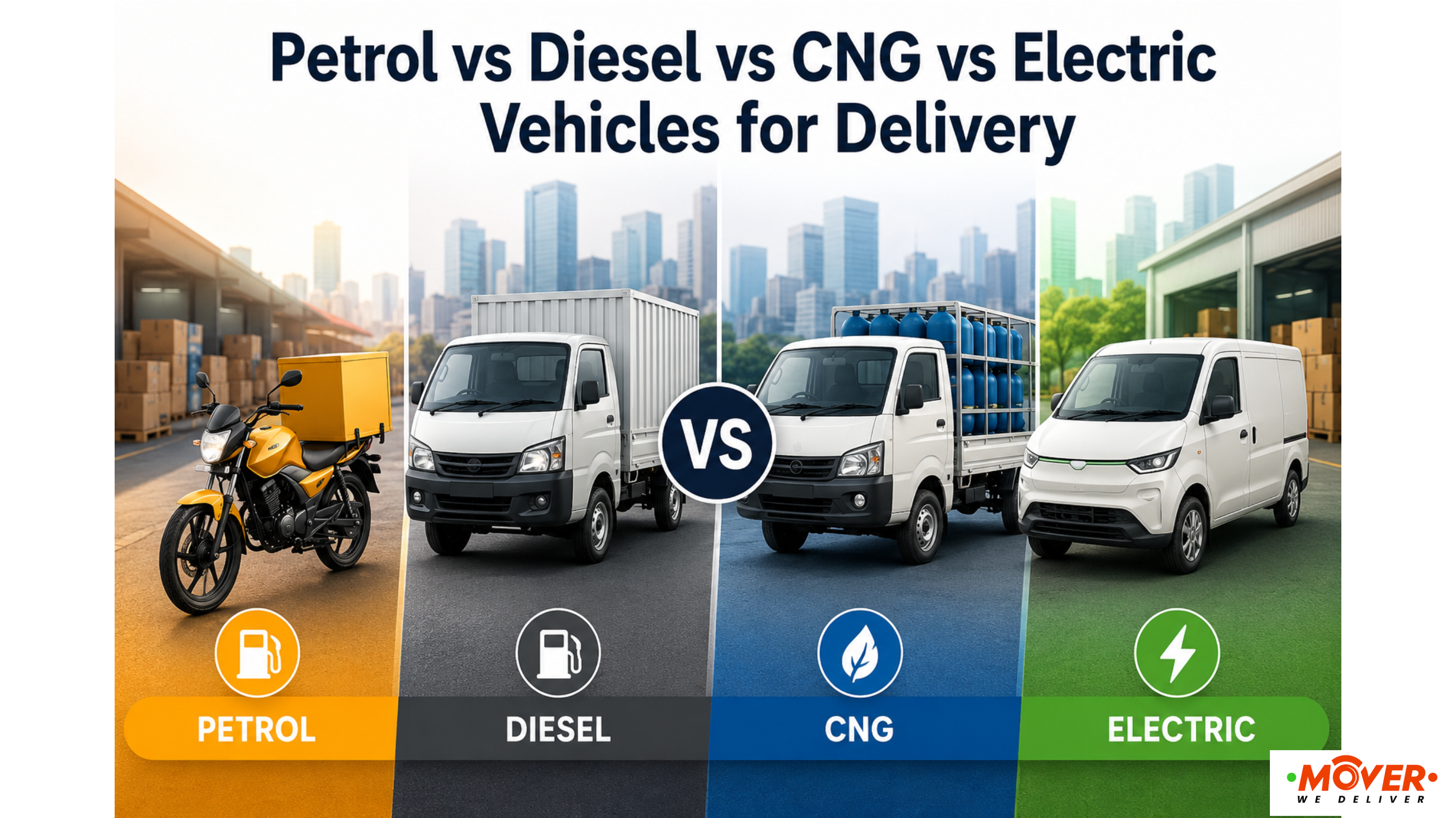
Selecting the right fuel type for your delivery vehicles completely depends on various factors, including delivery routes, operating costs and fleet requirements. Here’s a quick summary of the blog for you:
-
If you are looking for low-mileage deliveries, then Petrol vehicles are the best for you.
-
Choose diesel for heavy loads, long-distance routes and regional logistics.
-
Looking to reduce daily fuel expenses, then CNG is the best option for you.
-
Electric is best for urban deliveries, last- mile logistics, and the lowest running costs.
-
Compare the running costs of petrol vs diesel vs CNG vs electric vehicles for delivery.
-
Find out which vehicle offers the best long-term value.
The ideal fuel type isn't the same for every business; it depends on your delivery distance, cargo requirements, budget, and access to refuelling or charging infrastructure.
Fuel costs can significantly impact the profitability of any delivery business. Whether you're managing an ecommerce fleet, operating a courier service, or handling last-mile logistics, choosing the wrong fuel type can lead to higher operating expenses and lower returns over time. With businesses now able to choose between petrol, diesel, CNG, and electric vehicles, the decision is no longer as straightforward as it was a few years ago.
When comparing petrol vs diesel vs CNG vs electric vehicles for delivery, factors such as running costs, vehicle price, maintenance requirements, driving range, refuelling infrastructure, and daily delivery distance all play an important role. A fuel type that works well for long-distance freight transportation may not be the best choice for urban delivery routes or quick-commerce operations.
In this guide, we'll compare the advantages, limitations, operating costs, and ideal use cases of each fuel type. We'll also examine which option is best suited for different delivery scenarios, helping businesses choose the most cost-effective and practical solution for their fleet requirements.
Which Fuel Type Should You Choose for Delivery?
The best fuel type for delivery vehicles ultimately depends on your daily distance, cargo requirements, and access to fuel or charging infrastructure. Here are the details:
-
Choose Petrol if your delivery vehicle covers limited distances and keeping the purchase cost low is your priority.
-
Choose Diesel if you transport heavy loads or operate long-distance delivery routes regularly.
-
Choose CNG if reducing fuel expenses is more important than maximizing cargo space.
-
Choose Electric if you run predictable city routes and want the lowest operating cost over the long term.
Quick Comparison: Petrol vs Diesel vs CNG vs Electric Vehicles for Delivery
|
Factor |
Petrol |
Diesel |
CNG |
Electric |
|
Vehicle Cost |
Lowest |
Moderate |
Moderate |
Highest |
|
Running Cost |
Highest |
Moderate |
Low |
Lowest |
|
Maintenance |
Low |
High |
Moderate |
Low |
|
Driving Range |
High |
Highest |
High |
Moderate |
|
Refuelling / Charging Time |
5 mins |
5 mins |
5–15 mins |
1–8 hrs |
|
Payload Impact |
None |
None |
Reduced (CNG cylinder) |
None |
|
Best For |
Low-mileage deliveries |
Heavy loads & long distances |
Daily city deliveries |
Last-mile delivery & urban logistics |
Why Fuel Type Matters for Delivery Businesses?
Fuel is one of the largest operating expenses for any delivery business. Even a small difference in fuel costs can significantly impact profitability when vehicles cover hundreds of kilometres every week. This is why choosing the right fuel type is just as important as selecting the right vehicle.
-
Fuel costs directly affect delivery profitability, especially for businesses operating vehicles daily. Even small differences in fuel efficiency can lead to noticeable savings or higher expenses over time, making fuel selection a critical financial decision.
-
Businesses should evaluate factors like daily travel distance, cargo weight, maintenance needs, fuel availability, and long-term ownership costs. These elements help determine whether petrol, diesel, CNG, or electric vehicles will be the most practical and cost-effective choice.
-
The type of delivery operation also influences fuel selection. Urban deliveries often benefit from electric vehicles due to predictable routes, while long-distance or heavy-load transportation typically relies on diesel vehicles for better efficiency and performance.
-
Choosing the right fuel type improves efficiency and reduces long-term costs. Businesses planning last-mile operations can explore options like the best mini truck for last-mile delivery to better understand suitable vehicle choices for their needs.
Petrol Vehicles for Delivery
Should You Choose Petrol for Delivery?
When comparing petrol vs diesel for delivery, petrol vehicles are generally more affordable to buy and maintain. However, the higher fuel cost can quickly reduce profitability for businesses covering long distances every day.
For this reason, petrol vehicles are usually recommended for low-mileage operations rather than dedicated delivery fleets. Businesses looking to reduce long-term transportation costs may find CNG or electric alternatives more economical.
For companies not ready to invest in their own fleet, online truck booking services can provide access to delivery vehicles on demand without the ownership costs associated with petrol, diesel, or CNG vehicles.
Best Cases to Use Petrol Vehicles for Delivery
Petrol vehicles are best suited for businesses that do not operate delivery vehicles continuously throughout the day. Small retailers, local service providers, florists, bakeries, and businesses handling limited daily deliveries can benefit from the lower upfront purchase cost of petrol vehicles.
|
Pros of Using Petrol Vehicles for Delivery |
Cons of Using Petrol Vehicles for Delivery |
|
Lowest vehicle purchase cost |
Lower maintenance costs than diesel vehicles |
|
Widely available fuel stations |
Lower fuel efficiency compared to diesel and CNG |
|
Lower maintenance costs than diesel vehicles |
Can become expensive for high-mileage delivery operations |
Diesel Vehicles for Delivery
Should You Choose Diesel for Delivery?
When evaluating petrol vs diesel for delivery, diesel vehicles usually become more economical as daily running distances increase. Their higher torque output also makes them better suited for transporting heavier loads compared to petrol-powered alternatives.
For businesses evaluating a diesel vs electric delivery van, the decision often depends on route length, payload requirements, and access to charging infrastructure. However, diesel vehicles typically have higher maintenance requirements, including emission-control systems and periodic servicing costs. For businesses operating primarily within cities, electric alternatives may offer lower long-term operating expenses.
Best Cases Diesel Vehicles for Delivery
Diesel vehicles are often preferred for applications such as wholesale distribution, FMCG transportation, and operations that require higher payload capacities. Many of the vehicles commonly used for these routes fall into the 7 ft mini truck in India category because they offer a balance of cargo space, payload, and operating range.
|
Pros of Using Diesel Vehicles for Delivery |
Cons of Using Diesel Vehicles for Delivery |
|
Better fuel efficiency than petrol vehicles |
Higher maintenance costs |
|
Higher torque for carrying heavy loads |
Increasing emission regulations in some cities |
|
Suitable for long-distance operations |
Higher purchase cost than petrol vehicles |
|
Longer driving range per tank |
CNG Vehicles for Delivery
Should You Choose CNG for Delivery?
One of the biggest CNG delivery vehicle benefits is the significant reduction in running costs compared to petrol vehicles. This makes CNG an attractive option for businesses operating multiple vehicles or covering substantial daily distances.
When comparing CNG vs petrol delivery bike operating costs, CNG models typically offer better fuel economy, helping businesses reduce transportation expenses over time. The trade-off is reduced cargo space and dependence on CNG station availability.
For businesses that occasionally need higher load capacity beyond CNG vehicles, exploring mini truck rental services can help manage bulk deliveries efficiently without increasing fleet costs.
Overall, CNG is a practical choice for businesses focused on cost efficiency and eco-friendly operations within city limits, provided reliable refuelling infrastructure is available.
Best Use Cases
CNG vehicles are popular among courier companies, grocery delivery services, local distributors, and businesses operating fixed city routes. They are particularly effective when daily distances are predictable and access to CNG infrastructure is readily available.
|
Pros of Using CNG Vehicles for Delivery |
Cons of Using CNG Vehicles for Delivery |
|
Lower fuel costs than petrol and diesel |
Reduced cargo space due to CNG cylinder placement |
|
Reduced emissions |
Limited CNG station availability in some regions |
|
Suitable for daily city deliveries |
Longer refuelling queues during peak hours |
|
Lower operating costs for high-mileage fleets |
Electric Vehicles for Delivery
Should You Choose Electric Vehicles (EVs) for Delivery?
The biggest advantage of electric vehicles for last mile delivery is their significantly lower operating cost. Since electricity is generally cheaper than petrol, diesel, or CNG, businesses can reduce their cost per kilometre, especially when vehicles operate daily on fixed routes.
Electric vehicles also require less routine maintenance because they do not have components such as engine oil systems, exhaust systems, or complex transmission assemblies. This can further reduce long-term ownership costs for delivery fleets.
However, switching to EVs requires evaluating charging availability, route planning, and daily vehicle utilisation. A delivery vehicle covering 70–120 km per day in a city environment is often a stronger candidate for electrification than a vehicle regularly travelling long interstate routes.
The growing adoption of electric mini trucks for delivery in India highlights how businesses are increasingly prioritising lower operating costs and sustainable logistics solutions. For many urban delivery fleets, EVs are no longer an experimental option; they are becoming a practical business decision.
Best Use Cases
Electric vehicles are best suited for courier companies, ecommerce deliveries, grocery distribution, quick-commerce operations, and businesses running predictable daily routes. They perform particularly well in urban environments where vehicles return to a fixed hub or warehouse for charging.
|
Pros of Using EV Vehicles for Delivery |
Cons of Using EV Vehicles for Delivery |
|
Lower maintenance requirements due to fewer moving parts |
Higher upfront vehicle cost |
|
Zero tailpipe emissions |
Charging requires planning and infrastructure |
|
Ideal for fixed city routes and last-mile logistics |
Range can be a limitation for long-distance operations |
|
Eligible for various state and central EV incentives |
Charging downtime is longer than refuelling |
|
Lowest running cost among all fuel types |
Delivery Fleet Fuel Cost Comparison
Fuel costs directly affect the profitability of any delivery business. While the exact operating cost depends on vehicle type, load, route conditions, and fuel prices, the table below provides a general comparison of the four major fuel options used in delivery fleets.
|
Factor |
Petrol |
Diesel |
CNG |
Electric |
|
Approx. Running Cost/km |
₹6–8 |
₹4–6 |
₹2–4 |
₹1–2 |
|
Maintenance Cost |
Low |
High |
Moderate |
Low |
|
Vehicle Purchase Cost |
Lowest |
Moderate |
Moderate |
Highest |
|
Refuelling / Charging Time |
5 mins |
5 mins |
5–15 mins |
1–8 hrs |
|
Driving Range |
High |
Highest |
High |
Moderate |
|
Best for City Deliveries |
Moderate |
Moderate |
Good |
Excellent |
|
Best for Long-Distance Routes |
Limited |
Excellent |
Good |
Limited |
|
Overall Cost Efficiency |
Moderate |
Good |
Very Good |
Excellent |
Key Takeaways
-
Petrol vehicles have the lowest purchase cost but the highest running cost, making them better suited for low-mileage delivery operations.
-
Diesel vehicles remain a strong choice for heavy loads and long-distance transportation because of their higher torque and range.
-
CNG vehicles offer a balance between affordability and operating costs, making them popular for city-based delivery fleets.
-
Electric vehicles generally provide the lowest running cost and maintenance expenses, making them increasingly attractive for urban logistics and last-mile delivery operations.
EV Charging vs CNG Station for Logistics
When comparing EV charging vs CNG stations for logistics, the decision often comes down to convenience, operating patterns, and infrastructure availability.
|
Factor |
EV Charging |
CNG Stations |
|
Refuelling Time |
1–8 hours |
5–15 minutes |
|
Running Cost |
Lower |
Low |
|
Infrastructure Availability |
Growing |
More established |
|
Route Flexibility |
Moderate |
High |
|
Best For |
Fixed city routes |
Daily urban operations |
Quick Takeaway
-
Choose EVs if vehicles operate on fixed routes and can be charged overnight.
-
Choose CNG if quick refuelling and route flexibility are more important.
-
EVs generally offer lower operating costs, while CNG currently provides wider infrastructure access in many cities.
Which Fuel Type Vehicles Should You Choose for Delivery?
Choosing the best fuel type for delivery vehicles depends on your operating distance, cargo requirements, budget, and access to refuelling or charging infrastructure.
|
Delivery Scenario |
Recommended Fuel Type |
|
Ecommerce Deliveries |
Electric |
|
Long-Distance Logistics |
Diesel |
|
Budget Fleet Operations |
CNG |
|
Low-Usage Business |
Petrol |
|
Last-Mile Delivery |
Electric |
|
Heavy Cargo Transportation |
Diesel |
|
Urban Delivery Routes |
CNG |
|
Sustainability-Focused Fleets |
Electric |
Conclusion
There is no single winner in the Petrol vs Diesel vs CNG vs Electric Vehicles for Delivery debate because the right choice depends on how your business operates. Petrol vehicles remain suitable for low-mileage deliveries, while diesel continues to be the preferred option for long-distance transportation and heavier loads. Businesses looking for the most fuel efficient vehicles for delivery business operations should evaluate both fuel costs and long-term maintenance expenses before making a decision.
CNG offers an excellent balance between operating costs and practicality, making it a popular choice for city-based fleets. MOVER, an online truck booking app, can help compare vehicle options and streamline logistics operations without the long-term costs associated with maintaining a dedicated fleet.
FAQs
-
Which is the best fuel type for delivery vehicles?
There is no one-size-fits-all answer. Electric vehicles are often the best option for city-based deliveries, diesel works well for long-distance transportation, CNG is ideal for reducing fuel costs, and petrol is suitable for businesses with lower delivery volumes.
-
Is diesel still worth it for delivery fleets in 2026?
Yes. Diesel vehicles remain a practical choice for businesses transporting heavy loads or operating long-distance routes. Their higher torque and longer driving range continue to make them popular in logistics and freight transportation.
-
Are electric vehicles for last mile delivery cheaper than CNG?
Yes. Electric vehicles generally have lower running and maintenance costs than CNG vehicles. However, the overall savings depend on charging infrastructure, vehicle utilisation, and electricity costs.
-
What is the cheapest fuel option for delivery businesses?
Electric vehicles usually offer the lowest running cost per kilometre, followed by CNG. However, electric vehicles often require a higher initial investment compared to petrol or diesel alternatives.
-
Is EV charging cheaper than CNG for logistics operations?
In most cases, EV charging costs less per kilometre than CNG. However, businesses must also consider charging time, infrastructure availability, and vehicle utilisation before making a decision.
-
Petrol vs diesel for delivery: which is better?
For occasional deliveries and lower annual mileage, petrol vehicles can be a cost-effective option. For businesses covering longer distances or transporting heavier loads, diesel vehicles generally provide better efficiency and performance.
-
Can a CNG vehicle handle long delivery routes?
Yes, but route planning becomes important because CNG station availability varies across regions. CNG vehicles are typically more effective for city and regional deliveries than long interstate transportation.
-
Which fuel type offers the lowest operating cost?
Electric vehicles generally offer the lowest operating cost, followed by CNG. Diesel and petrol vehicles usually have higher fuel expenses, especially for businesses running large delivery fleets.
-
What are the biggest CNG delivery vehicle benefits?
The main benefits include lower fuel costs, reduced emissions, and lower operating expenses compared to petrol vehicles. These advantages make CNG a popular choice for urban delivery fleets.
-
What should businesses consider before switching to electric delivery vehicles?
Businesses should evaluate daily travel distance, charging availability, vehicle utilisation, payload requirements, and long-term operating costs before transitioning to electric delivery fleets.