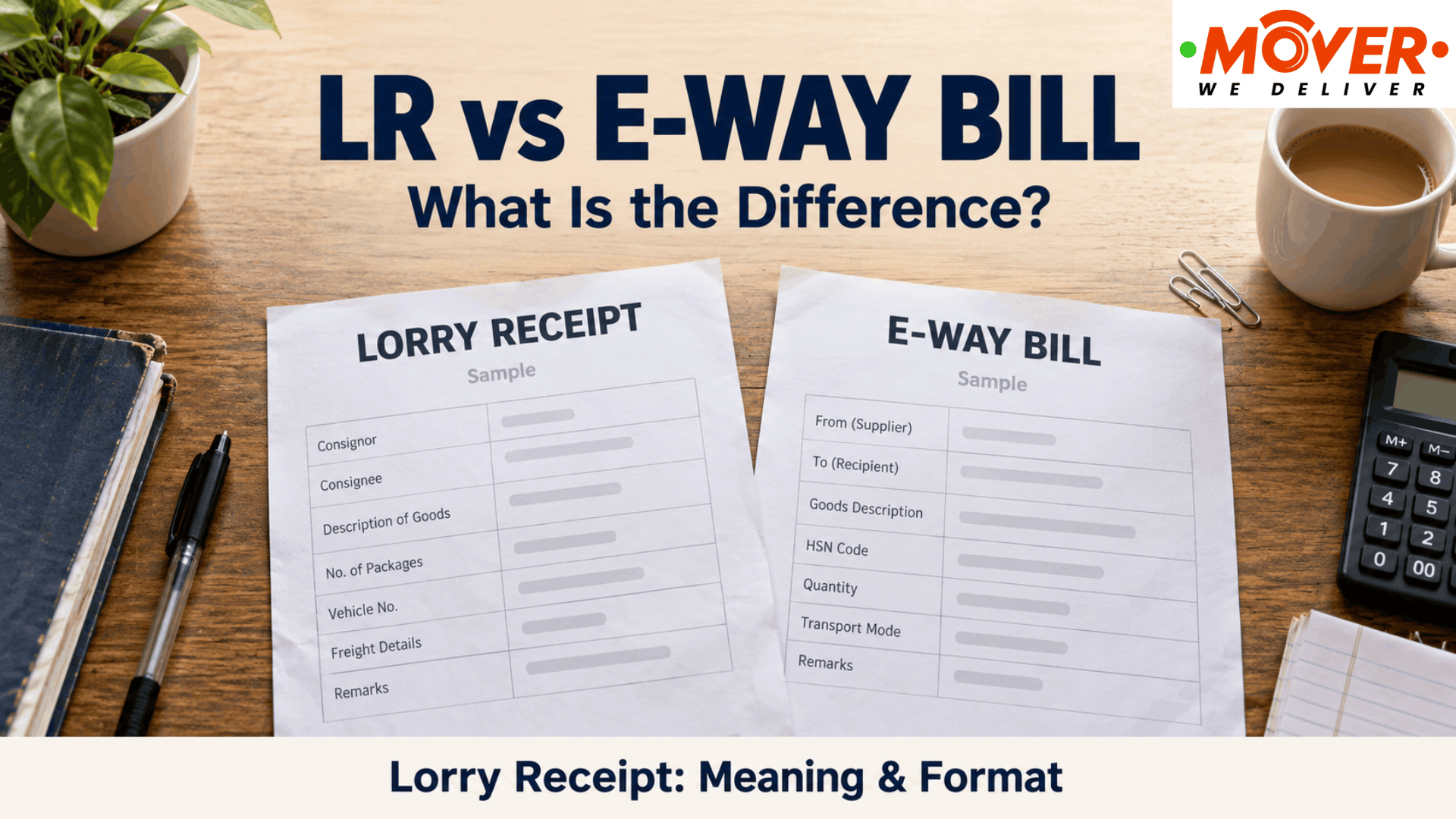

There is quite a bit of paperwork involved in sending goods by road. You have the goods invoice or other dispatch papers, and then the transporter gives you a receipt for the goods they have accepted.
This receipt is called a lorry receipt, or LR. Some people may know it as a bilty. Today, let’s discuss what a lorry receipt in transport means, what details you should check on it, and why it serves a different purpose from an e-way bill. So let’s start without wasting more time.
What is a lorry receipt in transport?
The full form of LR in transport is Lorry Receipt. The transporter issues it to acknowledge that they have accepted goods for carriage by road. The receipt gives the sender and carrier a record of that consignment.
Now, there are two words on the receipt that you should know. The person or business sending the goods is called the consignor, and the person or business named as the receiver is called the consignee.
You may also hear the names bilty, goods receipt or GR, and consignment note. People often use these names when discussing transport receipts, but you should still read the document. Similar names do not mean that every receipt has exactly the same details or terms.
The LR number is the carrier’s reference for that receipt or consignment. You can give this number to the transporter when asking about your shipment or requesting a copy.
Who issues the LR, and when do you receive it?
The carrier collects your goods and issues you with a receipt. For common carriers, the sender supplies the shipment information through a goods forwarding note, and the carrier prepares the goods receipt using that information.
The Carriage by Road Act explains when this receipt is issued. If the sender loads the goods, the carrier issues it after that loading is complete. In other cases, the receipt is issued when the carrier accepts the goods. The original goods receipt goes to the sender under these receipt rules.
If one company arranges your booking and another carrier takes the goods, ask the booking company whose receipt you will receive.
How do you read a lorry receipt?
The Carriage by Road Rules prescribe a goods receipt called Form 8 for common carriers. A carrier’s document may also include additional transport or billing details.
Let’s go through the main details and what you should check in them:
|
Detail on the LR |
What to check |
|
Carrier and receipt reference |
Check who issued the receipt, its LR or GR number, the date and the carrier’s authorised acknowledgement. |
|
Sender and receiver |
Check that the names and addresses refer to the correct parties and the intended delivery location. |
|
Goods and declared value |
Read the goods description, value, package count and weight or volume. They should describe the consignment handed over. |
|
Goods forwarding reference |
Check that the goods forwarding note number and date refer to the shipment information you supplied. |
|
Route and delivery details |
Read the origin, destination, distance and likely delivery date or agreed delivery period written on the receipt. |
|
Freight and payment |
See what freight has already been paid or collected, what remains due and who has agreed to pay it. |
|
Carriage terms |
Read the carrier’s responsibility for the goods and any agreed charge for taking greater responsibility. Ask the carrier to explain wording you do not understand. |
|
Additional details, where applicable |
Check the vehicle, GST, invoice or challan references and insurance information where these are included or required for the shipment or billing. |
You may find the vehicle number and GST details on a carrier’s document. These are additional transport or billing details; Form 8 does not have separate fields for them.
Also, take a moment to understand the payment wording. If the receipt says “freight to pay,” it means the transport charge still has to be paid. It does not automatically mean that the transporter will collect the selling price of the goods from your customer.
And if you see a declared value or an extra charge for the carrier taking greater responsibility, ask what that arrangement covers. Neither entry, by itself, means an insurance company has issued a policy for your goods. If insurance has been arranged, ask for the policy details too.
LR vs e-way bill: How are they different?
An LR acknowledges the goods the carrier has accepted for road transport. An e-way bill is generated through the government system for goods movement covered by the applicable GST rules.
A shipment may need both. Let’s compare LR vs e-way bill:
|
Point of comparison |
Lorry receipt |
E-way bill |
|
What it is for |
Records the carrier’s acceptance of goods for road transport and the carriage details. |
Documents goods movement where an e-way bill is required under GST rules. |
|
Who issues or generates it |
The carrier issues the receipt. |
The appropriate registered or enrolled party generates it through the government system. |
|
When it is prepared |
When the carrier accepts the goods, following the applicable receipt rules. |
Before the movement that requires it begins, following the applicable e-way bill process. |
|
Reference number |
Uses the carrier’s LR or goods receipt reference. |
Uses the e-way bill number generated by the system. |
|
Details it records |
Includes the parties, goods, packages, route, freight and carriage terms. |
Includes the goods document, parties and applicable transport details. |
|
Whether it replaces the other |
Having an LR does not remove an applicable e-way bill requirement. |
Having an e-way bill does not replace the carrier’s goods receipt. |
Along with these records, the shipment needs the appropriate goods invoice, bill of supply or delivery challan. The official e-way bill guidance explains the documents that accompany the goods and who may generate the bill.
Whether your shipment needs an e-way bill depends on the goods, value, reason for movement, route and applicable rules. If the pickup and delivery are in the same city, that fact alone does not settle the question. You can read the intracity e-way bill rules for that situation.
Where does the LR number go on an e-way bill?
The field for the goods invoice or delivery challan number is different from the field for the transport document number. Put the goods document reference in its own field. If you use an LR as the transport document reference, enter the carrier’s LR number there.
According to the official transport document details, the transport document number is optional for road transport. So, you do not have to enter an LR number for every road e-way bill.
You still need to complete the applicable vehicle and other movement details. An optional LR number does not mean that the goods are exempt from an e-way bill.
Is an LR the same as an invoice or proof of delivery?
A supplier’s goods invoice tells you what goods are being supplied and the charges for them. An LR tells you what the carrier accepted for transport. These documents explain different parts of the same shipment.
You may also receive a bill for the freight. Sometimes a carrier’s document can serve as both the consignment receipt and the transport tax invoice, provided it contains the required tax-invoice details. Read the details to understand whether the document also serves as a bill.
Now come to proof of delivery, or POD. This records the acknowledgement at the receiving end. Having an LR issued at pickup does not, on its own, tell you that the goods reached the named receiver.
Sometimes the receiver signs a copy of the LR when the goods arrive, and that signed copy becomes part of the delivery proof. In that case, the acknowledgement is on the receipt itself. Check what the receiver has signed for, including any quantity or damage remarks.
What should you check before the goods leave?
Once the receipt is prepared, compare it with the goods and your dispatch papers while the load can still be checked. Let’s go through this part:
-
First, count what you are handing over and see how that quantity has been written. For example, you may have 20 cartons with 10 pieces in each. Your goods invoice may show 200 pieces, while the LR shows 20 cartons. Both numbers can be right. Make sure the unit is clear and that the actual load matches those details.
-
Then check where the goods have to go and who is supposed to receive them. The customer’s billing address may be different from the delivery address, and that can be correct. What you need to check is whether the receipt names the right receiver and destination for this trip.
-
If you find a wrong entry, ask the carrier to correct it before dispatch. It could be the goods description, carton count, destination or payment arrangement. Get the corrected copy from the carrier and keep it with your goods invoice or other dispatch papers.
-
Also, decide who will handle any change to the transport details. If a different vehicle is used, the responsible person needs to deal with the relevant records and any e-way bill update that applies. A vehicle change does not automatically mean that you must obtain a new LR every time.
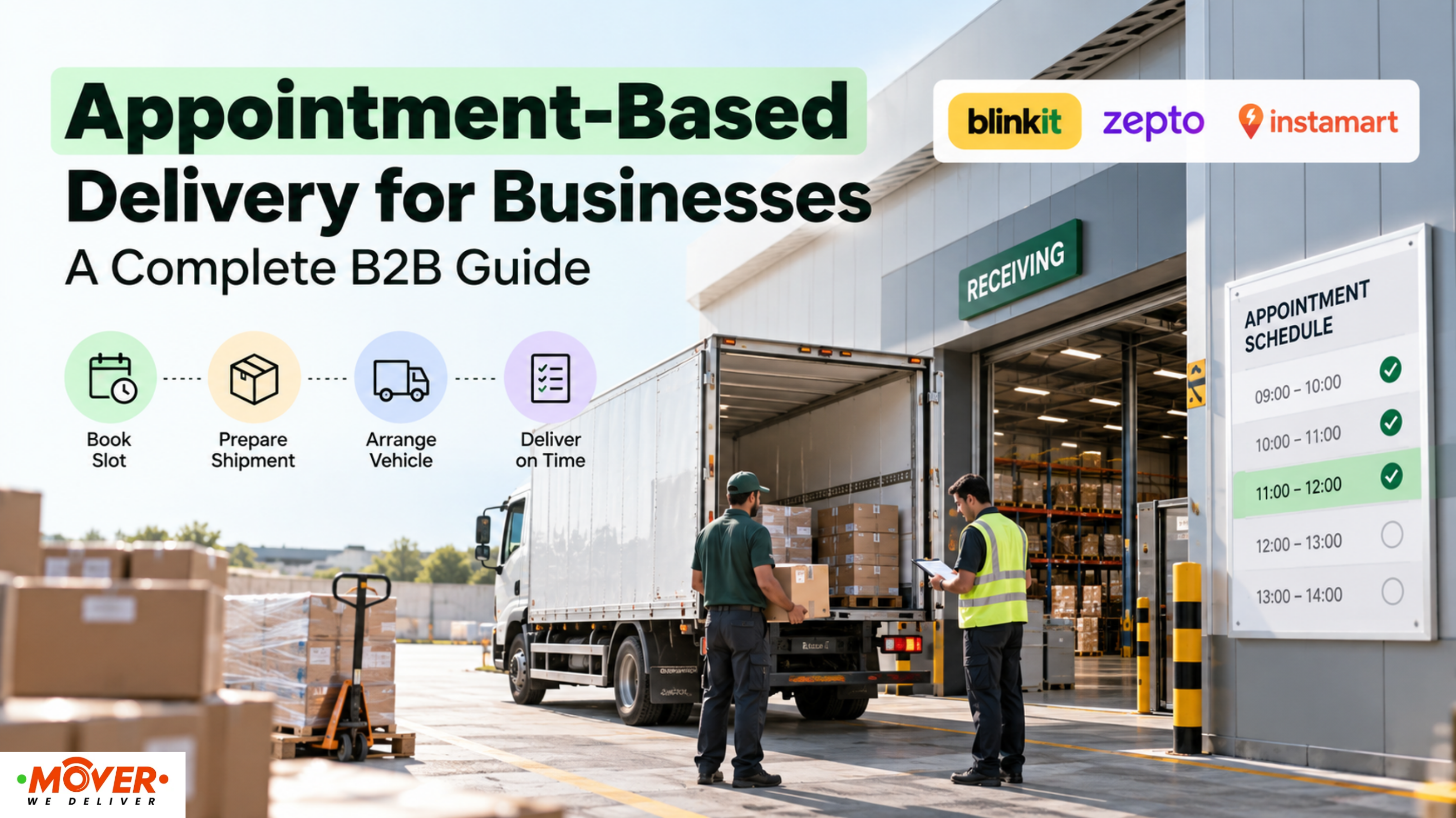
For a warehouse delivery, you also need to speak to the receiving team. Ask whether an appointment is needed and which documents should accompany the shipment. An LR does not book a receiving slot for you. Our guide to warehouse delivery planning explains how to prepare for that handover.
What should you confirm with the transporter before booking?
Before confirming the booking, ask the transporter what shipment information they need from you and when and how you will receive the receipt. You should also know whom to contact for a correction and who will handle the e-way bill details, where one is required.
The transport work, freight and payment dates should be agreed in the quotation or booking terms. If you pay an advance, keep the payment acknowledgement as well. The LR is issued for the goods accepted for transport.
If you are arranging business transport with MOVER, discuss the consignment documentation and delivery acknowledgement your business needs while planning the pickup. Ask the team to explain how you will receive these records for your booking.
FAQs about lorry receipts in transport
1. What is the full form of LR in transport?
The full form of LR in transport is Lorry Receipt. It is the receipt the carrier gives for the goods they have accepted for transport by road.
2. Are an LR, bilty and consignment note the same thing?
An LR, bilty and consignment note are names you may hear for a carrier’s goods receipt. But you should still read the paper the transporter gives you, because the details and terms may differ even when people use these names interchangeably.
3. Is the LR number the same as the invoice number or e-way bill number?
No, the LR number is not the same as the goods invoice number or the e-way bill number. The carrier gives its receipt a reference, the supplier gives the goods invoice its own reference, and the government system generates the e-way bill number.
4. Can an LR replace an e-way bill?
No, an LR cannot replace an e-way bill. If an e-way bill is required for your goods, you have to arrange it as well, even when you already have the carrier’s receipt.
5. Do I need an LR number to make an e-way bill for road transport?
You can make an e-way bill for road transport without entering an LR number in the transport document field. That field is optional. But you still have to fill in the vehicle details where required and complete the rest of the e-way bill.
6. Does an LR mean that the goods have been delivered?
No, just having an LR from pickup does not mean that the goods have been delivered. Ask the transporter for the receiver’s acknowledgement to check the delivery. If the receiver signed the LR copy when the goods arrived, that copy may be part of the delivery proof.