

Highlights:
-
Delivery partners earn around ₹26.5k–₹27.7k gross monthly, with net earnings of about ₹21k after expenses.
-
Truck drivers typically earn ₹15k–₹35k, with experienced drivers reaching ₹40k–₹60k+.
-
Delivery jobs offer high flexibility and quicker income flow, suitable for short-term earning needs.
-
Truck driving offers higher long-term earning potential, especially with experience and long-haul routes.
-
Entry into delivery work is easier, while truck driving requires licenses, training, and experience.
-
The better option depends on whether you prefer flexibility or higher long-term income.
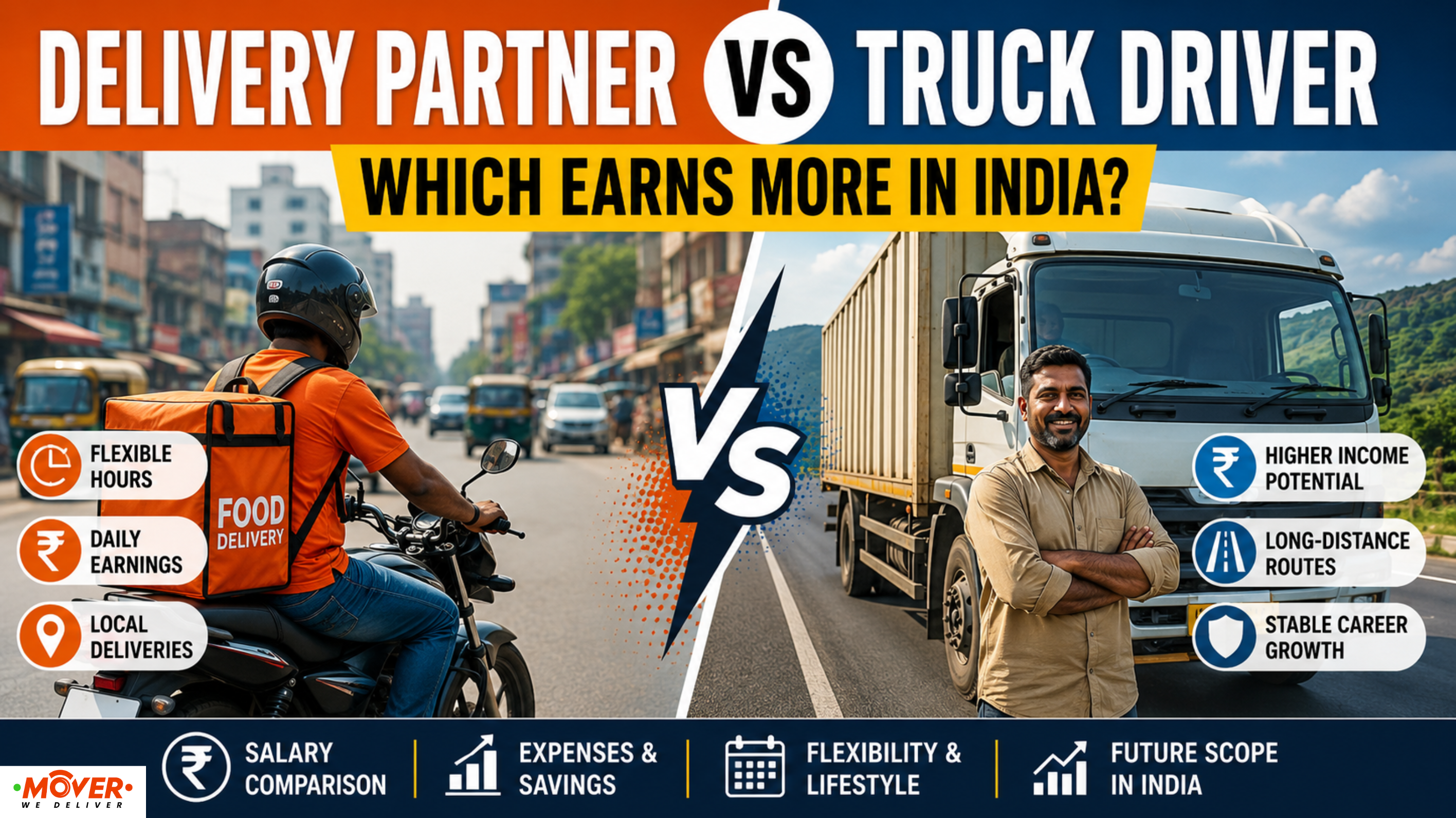
In today’s gig economy, one of the most common questions is: Delivery partner vs truck driver – which gig earns more in India? With the rapid growth of food delivery apps, quick commerce, and logistics platforms, both roles have become popular income options for people looking for flexible or stable work opportunities.
According to a report by Moneycontrol, delivery partners working full-time (8–10 hours a day, around 26 days a month) earn approximately ₹26,500–₹27,700 in gross monthly income, which translates to about ₹21,000 in net earnings after fuel and maintenance costs.
This rise in gig work is closely linked to the growth of earnings on delivery partner apps in India, where income depends heavily on working hours, demand, and incentives.
In comparison, truck drivers in India typically earn between ₹15,000 and ₹35,000 per month, while experienced long-distance or heavy vehicle drivers can earn up to ₹40,000–₹60,000+, depending on routes and experience.
Delivery Partner Earnings in India
-
Average Monthly Earnings (Gross vs Net): Full-time delivery partners working 8–10 hours daily can earn around ₹26,500–₹27,700 per month (gross). After accounting for fuel and maintenance costs, the net income comes down to approximately ₹21,000 per month.
-
Impact of Working Hours and Consistency: Earnings depend heavily on the number of hours worked and consistency. Delivery partners who work full-time schedules are more likely to achieve stable income levels. This is especially true in high-demand urban areas where Same Day Delivery in India is increasing rapidly.
-
Role of Incentives and Peak Demand: Income varies based on incentives, surge pricing, and peak-hour demand. Delivery partners working during weekends and peak hours tend to earn more, particularly in cities with high order volumes.
-
Cost Factors Affecting Take-Home Income: Fuel costs, maintenance, and platform deductions significantly impact earnings. Choosing efficient vehicles, such as those listed under best mileage bikes, can help delivery partners improve their net income over time.
Truck Driver Salary in India in 2026
Average Monthly Earnings Based on Experience
Truck driver salaries in India vary depending on experience, route type, and vehicle category. Entry-level drivers typically earn between ₹15,000 and ₹25,000 per month, while experienced drivers can earn around ₹30,000 to ₹35,000. For long-haul or heavy vehicle drivers, earnings can go up to ₹40,000–₹60,000+, especially on interstate routes.
Higher Earnings in Long-Haul and Heavy Vehicles
Drivers handling long-distance routes or heavy commercial vehicles tend to earn more due to higher responsibility and longer working hours. These roles often fall under larger logistics operations where structured transport systems like full truck load vs part truck load play a key role in determining route efficiency and income potential.
Stability and Consistent Income Flow
Unlike gig-based delivery work, truck driving often provides more consistent income, especially when working with logistics companies. Drivers are usually assigned fixed routes or contracts, which ensures steady earnings over time compared to fluctuating gig-based income.
Additional Costs and Challenges
Truck drivers face challenges such as long working hours, time away from home, and physical strain. While fuel costs are often managed by companies, expenses like food, stay, and maintenance support can vary depending on employment type and route conditions.
Delivery Partner vs Truck Driver – Key Differences
|
Feature |
Delivery Partner |
Truck Driver |
|
Monthly Earnings |
~₹26k–₹27.7k gross (₹21k net) |
₹15k–₹60k+ depending on experience |
|
Work Type |
Local, city-based |
Long-distance, interstate |
|
Flexibility |
High (choose working hours) |
Low (fixed schedules/routes) |
|
Entry Barrier |
Low |
High (license + experience required) |
|
Income Stability |
Variable |
More stable |
|
Vehicle Type |
Bike/scooter |
Commercial vehicles (SCV to HCV) |
Pros & Cons of Delivery Partner Jobs
Delivery partner roles are one of the fastest-growing gig opportunities in India, especially with the rise of quick commerce and hyperlocal delivery services. While the job offers flexibility and quick earnings, it also comes with certain limitations that workers should consider before choosing it as a long-term option.
Pros
-
Flexible Working Hours: Delivery partners can choose when and how long they want to work, making it ideal for people looking for part-time or flexible income opportunities.
-
Low Entry Barrier: Getting started is relatively easy—basic requirements like a two-wheeler, smartphone, and a valid license are enough to begin earning quickly.
-
Quick Payout Cycles: Many platforms offer daily or weekly payouts, ensuring faster cash flow compared to traditional jobs.
-
High Demand in Urban Areas: With the growth of e-commerce and same-day delivery services in India, delivery partners are in constant demand, especially in metro cities.
Cons
-
Income Instability: Earnings depend on demand, working hours, and incentives, which can fluctuate significantly.
-
High Operational Costs: Fuel, maintenance, and repairs directly affect take-home income, reducing overall profitability.
-
Physically Demanding Work: Long hours in traffic, weather conditions, and continuous riding can be exhausting over time, especially in cities with high urban traffic impact on delivery.
Pros & Cons of Truck Driving Jobs
Truck driving is a core part of India’s logistics ecosystem and offers a more structured earning path compared to gig-based work. While it provides higher long-term income potential, it also demands significant time commitment and physical endurance.
Pros
-
Higher Long-Term Income Potential: With experience and better routes, truck drivers can earn significantly more compared to entry-level delivery jobs.
-
More Stable Earnings: Truck drivers often work with logistics companies or contractors, providing more consistent income compared to gig-based work.
-
Essential Role in Logistics Industry: Truck drivers play a critical role in ensuring the smooth movement of goods across cities and states, making them an important part of the supply chain.
-
Lower Personal Fuel Burden: In many setups, companies handle fuel and operational costs, reducing direct expenses for drivers.
Cons
-
Long Working Hours and Travel: Drivers often spend days or weeks on the road, which can affect their personal lives and health.
-
High Responsibility and Risk: Driving heavy vehicles over long distances involves safety risks, strict regulations, and physical fatigue.
-
Higher Entry Requirements: Truck driving requires proper licensing, training, and sometimes experience, making entry more difficult than delivery jobs.
Delivery Partner vs Truck Driver - Which Job is Better for You?
Choosing between a delivery partner role and a truck driving job depends on your income goals, lifestyle preferences, and long-term plans. Both options offer earning opportunities, but they suit very different types of workers.
1. Choose Delivery Partner if You Want Flexibility
If you prefer flexible working hours and the ability to earn a daily or weekly income, becoming a delivery partner is a better option. It is ideal for those who want quick entry into the workforce without long-term commitments or specialised training.
2. Choose Truck Driving for Higher Long-Term Income
If your goal is to build a stable career with higher earning potential over time, truck driving is the better choice. With experience and better routes, drivers can significantly increase their income compared to entry-level roles.
3. Choose Based on Lifestyle Preferences
Delivery jobs allow you to stay within your city and maintain a routine, while truck driving often involves long-distance travel and time away from home. Your personal comfort with travel and work-life balance plays a key role in this decision.
4. Choose Based on Investment and Skills
Delivery work requires minimal investment and basic skills, whereas truck driving requires proper licensing, training, and experience. If you are ready to invest time in skill development, truck driving offers better long-term returns.
5. Consider Future Growth Opportunities
The logistics sector in India is expanding rapidly, creating opportunities in both roles. However, truck driving offers clearer long-term career growth, while delivery work remains more suitable for short-term or flexible earning needs.
Challenges in Both Jobs
While both delivery partner and truck driving roles offer earning opportunities, they also come with practical challenges that can affect long-term sustainability.
1. Physical Strain and Long Working Hours
Both jobs require extended working hours and physical effort. Delivery partners spend long hours riding in traffic, while truck drivers often drive continuously for long distances, leading to fatigue and health concerns.
2. Income Dependency on External Factors
Earnings in both roles depend on factors like demand, routes, and working hours. Delivery partners rely on order volume, while truck drivers depend on trip availability and contracts, making income less predictable in certain situations.
3. Cost and Expense Management
Delivery partners bear fuel and maintenance costs directly, which reduces their net income. In contrast, truck drivers may not always handle fuel expenses, but still face indirect costs like food, stay, and long-route adjustments that impact savings.
4. Work-Life Balance Challenges
Maintaining work-life balance can be difficult in both roles. Delivery partners deal with daily pressure and time-bound deliveries, while truck drivers often stay away from home for extended periods, affecting their personal lives.
Future Scope – Gig Economy vs Logistics Industry
The future of both delivery and truck driving roles is closely tied to the growth of India’s logistics and mobility ecosystem.
-
Rapid Growth of On-Demand Delivery Services: The rise of quick commerce and same-day delivery vs next-day delivery in India is increasing demand for delivery partners, especially in urban areas. This trend will continue to create short-term earning opportunities.
-
Expansion of Logistics and Transport Industry: India’s logistics sector is growing rapidly, creating long-term demand for truck drivers. With increasing freight movement and supply chain expansion, skilled drivers will remain essential to the industry.
-
Shift Toward Electric and Efficient Transport: The industry is gradually moving toward sustainable mobility solutions, including electric mini trucks for delivery in India, which may reshape both delivery and trucking jobs in the coming years.
-
Technology-Driven Opportunities: Digital platforms, route-optimisation tools, and logistics apps are improving efficiency across both roles. Workers who adapt to technology will have better earnings and growth opportunities in the future.
Conclusion
Both delivery partner and truck driving roles offer earning opportunities, but they cater to very different needs and career paths. If you’re looking for flexibility, quick entry, and daily income flow, delivery work is a practical choice. However, if your goal is to build a more stable career with higher long-term income potential, truck driving stands out as the better option.
The decision ultimately depends on your priorities, whether it’s convenience and flexibility or stability and growth. Understanding the nature of work, expenses involved, and lifestyle impact can help you make a smarter choice.
For those exploring opportunities in logistics or transport, having access to the right tools can make a big difference. Platforms like an online truck booking app simplify vehicle access and route planning, while working with a structured network, such as a MOVER driver partner system, can provide more consistent earning opportunities.
As the logistics industry continues to grow, both roles will remain relevant, each serving a different purpose in India’s evolving mobility ecosystem.
FAQs on Delivery Partner vs Truck Driver
1. Can a delivery partner earn more than a truck driver in India?
In some cases, top-performing delivery partners in high-demand cities can earn competitive income, but generally, experienced truck drivers have higher long-term earning potential.
2. Which job gives faster income delivery, or truck driving?
Delivery jobs typically offer faster payouts (daily or weekly), making them better for immediate income compared to truck driving, which often follows monthly payment cycles.
3. Do delivery partners have fixed salaries in India?
No, delivery partners do not have fixed salaries. Their earnings depend on factors like working hours, number of deliveries, incentives, and demand in their area.
4. Is truck driving a stable career option in India?
Yes, truck driving is considered more stable than gig delivery jobs, especially when working with logistics companies or long-term contracts.
5. Which job has higher expenses: delivery or truck driving?
Delivery partners usually bear fuel and maintenance costs directly, which reduces their net income. Truck drivers may have fewer direct expenses, depending on their employment setup.
6. Can I switch from a delivery partner to a truck driver?
Yes, but you will need a valid heavy vehicle license, proper training, and sometimes experience before starting as a truck driver.
7. Which job is better for part-time income?
Delivery partner roles are more suitable for part-time work due to flexible working hours and easy entry requirements.
8. Do truck drivers earn more with experience?
Yes, experienced truck drivers, especially those handling long-haul routes or heavy vehicles, can earn significantly more than beginners.
9. Which job is safer, delivery or truck driving?
Both roles have risks. Delivery partners face urban traffic challenges, while truck drivers deal with long-distance driving risks and fatigue.
10. Is there career growth in delivery jobs?
Career growth in delivery jobs is limited compared to traditional roles, but some workers transition into fleet management or logistics operations.
11. Can delivery partners increase their earnings?
Yes, by working during peak hours, completing more deliveries, and optimising routes, delivery partners can improve their earnings.
12. Are truck drivers paid per trip or monthly?
Truck drivers may be paid per trip or monthly, depending on their employer, contract type, and route structure.
13. Which job is better for long-term career growth?
Truck driving generally offers better long-term growth due to higher earning potential and structured roles in the logistics industry.
14. Does location affect delivery partner earnings?
Yes, earnings vary significantly by city. Metro areas with higher demand typically offer better earning opportunities.
15. Which role is easier to start in India?
Delivery partner roles are easier to start because they require minimal training and basic documentation, while truck driving requires licensing and experience.